 The referral pathways guide



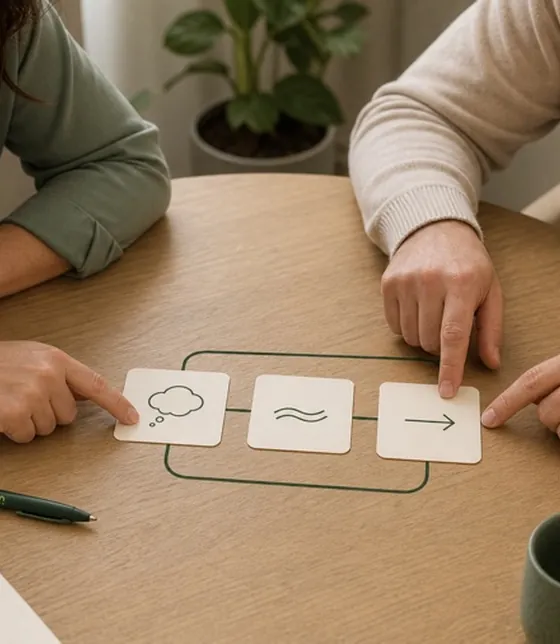 Read with intention













 Meet the clinicians
The approach matters, the fit matters more.
The approaches we draw on, and what each is like in the room.
The name on the method matters less than the match.
Every approach below has research behind it. What helps most depends on your problem, how you like to work and your clinician, so we start with a conversation, not a label.
- Your psychologist suggests an evidence-based approach and explains why.
- Most clinicians combine approaches, shaped around you, not a manual.
- Feeling understood, and safe to be honest, does much of the work.
- You can ask for a particular approach, or to change it, at any time.
Eleven ways in, explained plainly.
All are used at Mind Health, in Parramatta and by telehealth. Tap a card for the full guide.
Cognitive Behaviour Therapy (CBT)
A practical, structured approach to how you think, feel and act, with tools to use between sessions.
Often used for: anxiety and panic · depression · OCD · insomnia · stressAcceptance & Commitment Therapy (ACT)
Helps you stop fighting difficult thoughts and feelings, and put your energy into what matters to you.
Often used for: chronic worry · low mood · burnout · chronic pain · perfectionismDialectical Behaviour Therapy (DBT)
Concrete skills for intense emotions, steadier relationships and acting in line with your goals.
Often used for: overwhelming emotions · impulsivity · self-harm urges · relationship conflictEye Movement Desensitisation & Reprocessing (EMDR)
Helps memories that still feel raw lose their charge. You don't have to retell every detail.
Often used for: single-incident and childhood trauma · PTSD · flashbacks · phobiasSchema Therapy
Works with deep, long-standing patterns from early experience, often for what other therapy hasn't shifted.
Often used for: repeating relationship patterns · low self-worth · recurrent depressionInterpersonal Therapy (IPT)
A focused, time-limited therapy for low mood linked to relationships, roles and life changes.
Often used for: depression · grief and loss · major life transitions · lonelinessSolution-Focused Brief Therapy (SFBT)
Looks forward, building on your strengths and what already works, often over a shorter course.
Often used for: feeling stuck · a specific goal or decision · short, focused supportEmotionally Focused Therapy (EFT)
Helps couples and individuals see the cycle behind conflict and rebuild a secure bond.
Often used for: recurring arguments · feeling distant · rebuilding trust · closenessPositive Psychotherapy (PPT)
Builds strengths, meaning and engagement alongside difficulty. It sits behind our HEALTHY framework and the P3 program.
Often used for: low mood and flatness · loss of direction · wellbeing and resilienceProblem-Solving Therapy (PST)
A clear, structured way to break problems down and act on them, and a method you keep.
Often used for: overwhelm · life pressure · difficult decisions · adjusting to changeFamily Therapy
Works with the whole family on patterns and communication. No one is treated as the problem.
Often used for: communication breakdown · parent–teen conflict · blended families- Individual therapyOne-to-one, tailored to you
- Couples therapyConnection, conflict & repair
- TelehealthSecure video sessions Australia-wide
- Programs & groupsStructured, time-limited courses
- Assessments & reportsWhen a clearer picture comes first
- Find a psychologistMatch on approach, language & availability
Four more ways we work.
Some of our clinicians also use these. Not every clinician offers each one, so ask us who does.
Gottman Method (couples)
A structured approach for couples. It starts with an assessment, then works on conflict, friendship and what you want to build together.
Often used for: recurring arguments · feeling distant · rebuilding trustCognitive Processing Therapy (CPT)
A structured talking therapy for PTSD. It looks at the beliefs a trauma can leave behind, such as self-blame or feeling unsafe.
Often used for: PTSD · guilt and self-blame after traumaExposure and Response Prevention (ERP)
Facing a feared thought or situation step by step, without doing the compulsion, at a pace you agree with your psychologist.
Often used for: OCD · related worries and ritualsMotivational Interviewing (MI)
A conversation about change for when part of you wants it and part of you does not. You set the goal and the pace.
Often used for: alcohol and drug use · gambling · health habitsTalking about change, at your pace.
Motivational interviewing (MI) is a way of talking about change when you feel two ways about it. It is often used with alcohol and drug use, gambling, smoking, eating and exercise habits, and sticking with a treatment plan.
- Your clinician listens more than they advise, and reflects back what they hear.
- You look at your own reasons for and against a change, in your own words.
- You choose the goal and the pace. Nobody lectures you or pushes.
- It is often used alongside CBT or another approach, once you know what you want to work on.
MI can be the whole of a short piece of work, or the first few sessions of a longer one. See also addictions and motivation.
Who offers motivational interviewing here: Bülent Ada, Elizabeth Lee, Annette Haggerty.

What a course of therapy actually looks like.
- 1
Assessment and matching
The first session or two is about understanding what's happening and what you've tried. Your psychologist then suggests an approach and explains why.
Step one - 2
The work itself
Usually weekly or fortnightly at first, then spaced out, with some practice between sessions.
Step two - 3
Review and adjust
You review progress together, adjust the approach if needed, and decide together when to finish.
Step three
More ways we work.
Some of our clinicians also offer these. Not every clinician offers each one, so ask us who does.
Trauma-focused CBT (TF-CBT)
A structured therapy for the effects of trauma: skills for coping first, then working through memories and reminders.
Often used for: PTSD · traumaMindfulness-based therapy (MBCT)
Paying attention to the present moment, to change how you relate to difficult thoughts and feelings.
Often used for: staying well after depression · stressCompassion-focused therapy (CFT)
Understanding self-criticism and shame, and building a kinder way of responding to yourself.
Often used for: self-criticism · shameSex therapy
A confidential talking therapy for sexual concerns, on your own or as a couple.
Often used for: desire · intimacy · sexual difficultiesClinical hypnotherapy
A focused, relaxed state of attention, used alongside other therapy. You stay aware and in control.
Often used for: stress · tension · painRelaxation training
Practical ways to settle the body's stress response, such as slow breathing and muscle relaxation.
Often used for: anxiety · stress · sleepCognitive remediation
Structured practice to strengthen thinking skills such as attention, memory and planning.
Often used for: after a brain injury or illnessCalming the body.
Relaxation training teaches practical ways to settle the body's stress response. It is often part of treatment for anxiety, stress, sleep problems and pain.
- Slow breathing, practised until it comes easily
- Progressive muscle relaxation: tensing and releasing muscle groups in turn
- Guided imagery and grounding, for moments of high stress
- A short daily routine you can keep using after therapy ends
Try a guided breathing exercise on our resources page.
Who offers relaxation training here: Bülent Ada, Sijal Ansari, Taline Bardakjian, Michael L. T. Cheung, Irfan Yigit, Annette Haggerty.
Training thinking skills.
Cognitive remediation is structured practice to strengthen thinking skills such as attention, memory, planning and problem-solving. It is sometimes used after a brain injury or illness, or alongside treatment for conditions that affect thinking.
- An assessment first, so the plan targets the skills that matter to you
- Exercises in sessions, sometimes with computer-based tasks
- Practical strategies, such as planners, reminders and routines
- Regular reviews against the goals you set
See also neuropsychological assessment and memory assessment.
Who offers cognitive remediation here: Robert Ruane.
Where to next.
Not sure where to start? Find a psychologist and we'll suggest an approach once we understand what's going on.



What people ask about the approaches.
How do I know which therapy approach is right for me?
Do I have to choose an approach before I book?
How long does a course of therapy usually take?
Do I need a GP referral to start therapy?
Are these approaches available online?
What if the approach isn't working for me?

Not sure which one fits? That's our part of the job.
Tell us what you're working through and we'll match you with a psychologist whose approach suits it, in Parramatta or online, usually after a free triage.
