 The referral pathways guide



 Read with intention













 Meet the clinicians
Find your way back to each other.
EFT helps couples (and individuals) understand the emotional cycle that drives conflict and disconnection, and rebuild the safe, secure bond underneath it.
What EFT helps with
Every plan is tailored to you. This is a guide to where this approach is most often used.
- Recurring arguments and conflictRead more
- Feeling distant or disconnectedRead more
- Rebuilding trustRead more
- Communication breakdownRead more
- Navigating a rough patchRead more
- Attachment and closenessRead more
- Relationship strain alongside depressionRead more
- Couples affected by past traumaRead more
- Couples facing illness or major stress
- Reconnecting after a breach of trust or affairRead more
Not sure if it's the right fit? That's exactly what your first session is for. We'll recommend the approach (or blend of approaches) that suits you.
The approach, step by step.
A clear sense of how the work unfolds, always at your pace.
- 1
Name the cycle
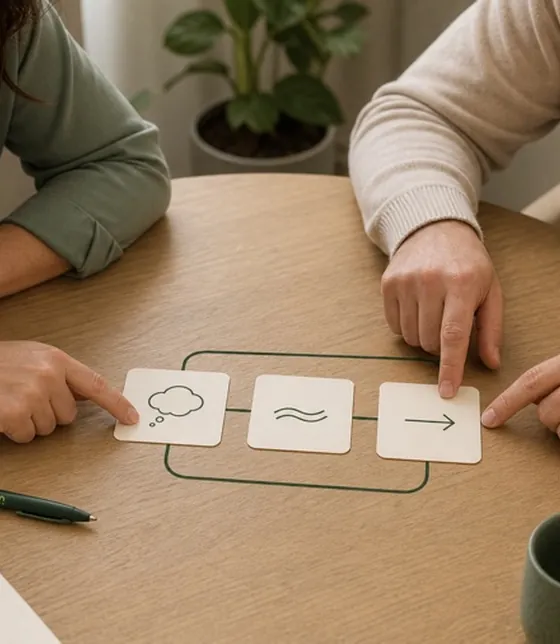
We map the negative pattern that hijacks you both, so the enemy becomes the cycle, not each other.
Early sessions - 2
Reach the emotions underneath
We slow down to the softer feelings beneath the conflict: the fears and longings that rarely get voiced.
The sessions that follow - 3
Rebuild the bond
New, more open conversations create safety and closeness: a more secure connection you can return to.
Ongoing
EFT is warm and emotionally engaged. Sessions focus on what happens between you in the room, gently and without blame.
Know your costs before you start.
With a Mental Health Treatment Plan from your GP, Medicare rebates apply to individual therapy. We'll always be clear about costs before you begin.
See fees- Medicare: rebates on up to 10 sessions a year with a Mental Health Treatment Plan.
- NDIS, DVA, Workers Comp & CTP: usually no out-of-pocket cost when approved.
- Private health: claim through your extras cover, with no referral needed.

Practitioners who use this approach.




Things people ask before booking.
Is EFT only for couples?
What if my partner won't come?
What happens in the first EFT session?
Can couples therapy be done online?
How is EFT different from the Gottman Method?
Is couples therapy covered by Medicare?
Do I need a referral?
References
- Wiebe SA, Johnson SM. (2016). A review of the research in emotionally focused therapy for couples. Family Process, 55(3), 390-407. doi.org/10.1111/famp.12229
- Spengler PM, Lee NA, Wiebe SA, Wittenborn AK. (2024). A comprehensive meta-analysis on the efficacy of emotionally focused couple therapy. Couple and Family Psychology: Research and Practice, 13(2), 81-99. doi.org/10.1037/cfp0000233
Further reading and free tools.

Your next step starts here.
Tell us what's going on and we'll match you with the right psychologist, usually after a free triage. No referral needed to begin.
Talk to us
How can we help?
Fees & rebatesFind a psychologistMind Health CheckReferring a clientWorkplaces & EAP
If you need support right now Lifeline 13 11 14 · Suicide Call Back 1300 659 467 · 13YARN 13 92 76 · Emergency 000. Available 24/7 — this panel isn't.
We'll call you back on the number you gave us within one business day. If it's urgent, call 1300 084 200.
