 The referral pathways guide



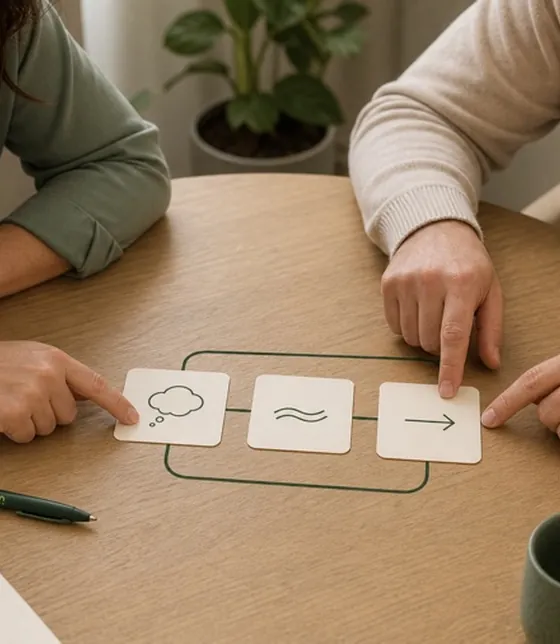 Read with intention













 Meet the clinicians
Understand how your brain works.
A neuropsychological assessment examines the relationship between the brain and behaviour: a detailed profile of memory, attention, language and executive function, led by our clinical neuropsychologist.
Reasons people seek a neuropsychological assessment.
A neuropsychological assessment maps thinking skills to answer a specific question, whether after injury or illness, for a diagnosis, or to support planning and funding.
- You are recovering from a head injury, concussion or stroke and want to understand its impact.
- A neurological condition is affecting how you think day to day.
- You have noticed changes in memory, attention, planning or word-finding.
- There are questions about ADHD, autism or a learning difficulty affecting function.
- You want to understand the cognitive effects of a medical condition or its treatment.
- You need detailed evidence for NDIS, Centrelink DSP, WorkCover or CTP.
Every assessment answers a clear question. We agree on what you need to know before we begin, and make sure the report answers it.
A precise, whole-picture assessment.
Detailed, standardised testing across the domains that matter, interpreted by a clinical neuropsychologist and translated into clear, usable findings.
Memory & learning
How you take in, hold and recall information across verbal and visual domains.
Attention & processing
Concentration, processing speed and the ability to focus and switch between tasks.
Executive function
The brain's control system: planning, organisation, problem-solving and decision-making.
Report & recommendations
A report you own, with recommendations for treatment, rehabilitation, study, work or funding.
Neuropsychological assessments are led by our clinical neuropsychologist, Robert Ruane. Every assessment includes a feedback session in plain language.
Your assessment, step by step.
Clear and structured from start to finish, so you always know what is next.
- 1
Initial consultation
We assess suitability, choose the right assessment for your question, and send questionnaires ahead of time.
Step one - 2
Testing sessions
Structured interviews and standardised tests, over one or more sessions depending on the question. It is engaging, not an exam.
Step two - 3
Report & feedback
A written report and a feedback session explaining what it means and what to do next.
Step three

Know your costs before you start.
Neuropsychological assessments are quoted in full and in writing before you commit. The scope depends on the question, so we confirm it up front.
See fees- NDIS, DVA, WorkCover & CTP: assessment and reports are often funded when part of an approved plan or claim.
- Medicare: assessment is a private-fee service, so a Mental Health Treatment Plan does not cover it. The exception, item 82000, is explained below.
- Private health: some extras policies contribute towards psychological assessment. Check your cover.
- Fee
- See fees
- Clinician time
- 12 hours, including scoring and the report
- Ages
- 16+
Every assessment includes the clinical interview, standardised testing, scoring, a written report and a feedback session. Complex presentations may need additional time; we confirm the hours and the report timing with you before anything is booked.
Assessment is a private-fee service. Medicare's Better Access items cover therapy sessions, not assessment. Medicare's rebate for psychological assessment is narrow: item 82000, for people under 25 with a complex neurodevelopmental disorder or eligible disability, on referral from a paediatrician or psychiatrist (for an eligible disability, a GP or another specialist can also refer), in person or by telehealth. NDIS, DVA and insurer-funded assessments are accepted.
Who carries out your assessment.

Things people ask before booking.
Do I need a referral for a neuropsychological assessment?
How long does a neuropsychological assessment take?
Can it be done online?
What will the report help with?
Who receives my report?

A clearer picture, and a plan.
Neuropsychological assessment led by a clinical neuropsychologist, with a report you can actually use. Quoted in writing first.
Talk to us
How can we help?
Fees & rebatesFind a psychologistMind Health CheckReferring a clientWorkplaces & EAP
If you need support right now Lifeline 13 11 14 · Suicide Call Back 1300 659 467 · 13YARN 13 92 76 · Emergency 000. Available 24/7 — this panel isn't.
We'll call you back on the number you gave us within one business day. If it's urgent, call 1300 084 200.
