 The referral pathways guide



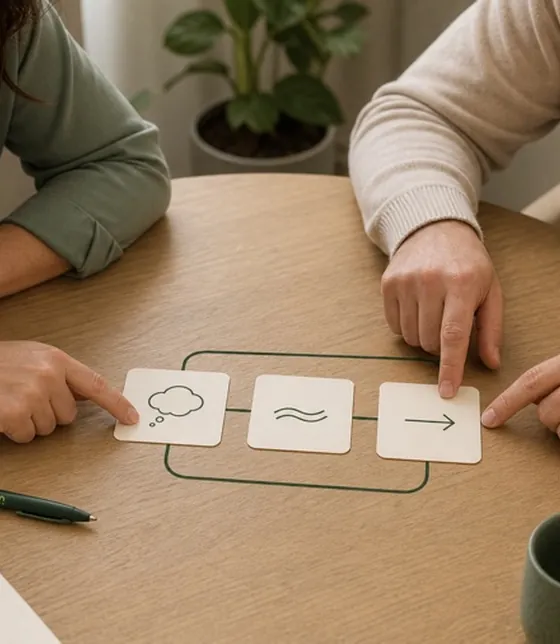 Read with intention













 Meet the clinicians
Understand changes in your memory.
Memory is several skills, not one, and each can change differently. A memory assessment maps how you store, hold and recall information, and what the pattern means.
Reasons people seek a memory assessment.
A memory assessment answers a specific question about memory and attention. It can reassure, guide care, or support a diagnosis or an application.
- You have noticed forgetfulness, or trouble recalling recent events or conversations.
- You or a family member have questions about memory changes with ageing.
- You are recovering from a stroke, brain injury or concussion and want to understand the impact.
- Memory or concentration difficulties are affecting study, work or daily life.
- A GP or specialist has recommended memory testing to inform a diagnosis.
- You need clear evidence to support care planning, NDIS or other applications.
Every assessment answers a clear question. We agree on what you want to know before we begin, and make sure the report answers it.
A detailed look at how memory works.
Standardised, validated testing across memory and related abilities, interpreted by a qualified psychologist and translated into clear findings.
Verbal & visual memory
How you learn and recall words, stories and visual information over time, using tools such as the Wechsler Memory Scale.
Working memory & attention
Holding and using information in the moment, and the attention that supports it.
Pattern & interpretation
We look at the pattern of results to understand the likely cause, not just the individual scores.
Report & recommendations
A clear written report with practical recommendations for care, support, study or work.
Memory assessments are conducted by a qualified psychologist. Every assessment includes a feedback session where we explain the findings in plain language.
The tests we use.
Your psychologist chooses the tests that fit your questions, so you may not do every one of these. The ages are each test's own range.

WMS®-5 A&NZ
Wechsler Memory Scale®, Fifth Edition, Australian and New Zealand
Ages: 16 to 90
How well new things you hear and see are learned and recalled, straight away and later.

WAIS®-5 A&NZ
Wechsler Adult Intelligence Scale®, Fifth Edition, Australian and New Zealand
Ages: 16 to 90
Verbal understanding, visual-spatial skills, reasoning, working memory and processing speed.
Test names and logos are trademarks of their publishers.
Your assessment, step by step.
Clear and structured from start to finish, so you always know what is next.
- 1
Intake & history
We start with your story and what prompted the assessment. Questionnaires are sent ahead of time.
Step one - 2
Testing session
Standardised memory and attention tests in a calm, supported setting. It is engaging, not an exam.
Step two - 3
Report & feedback
You receive a written report and a feedback session that explains the findings and the next steps.
Step three
Know your costs before you start.
Memory assessments are quoted in full and in writing before you commit, so there are no surprises.
See fees- NDIS, DVA, WorkCover & CTP: assessment is often funded when it is part of an approved plan or claim.
- Medicare: assessment is a private-fee service, so a Mental Health Treatment Plan does not cover it. The exception, item 82000, is explained below.
- Private health: some extras policies contribute towards psychological assessment. Check your cover.
- Fee
- See fees
- Clinician time
- 6 hours, including scoring and the report
- Ages
- 16+
Every assessment includes the clinical interview, standardised testing, scoring, a written report and a feedback session. Complex presentations may need additional time; we confirm the hours and the report timing with you before anything is booked.
Assessment is a private-fee service. Medicare's Better Access items cover therapy sessions, not assessment. Medicare's rebate for psychological assessment is narrow: item 82000, for people under 25 with a complex neurodevelopmental disorder or eligible disability, on referral from a paediatrician or psychiatrist (for an eligible disability, a GP or another specialist can also refer), in person or by telehealth. NDIS, DVA and insurer-funded assessments are accepted.
Who carries out your assessment.


Things people ask before booking.
Do I need a referral for a memory assessment?
How long does a memory assessment take?
Can a memory assessment be done online?
Will the assessment tell me if I have dementia?
Who receives my report?

Clarity about your memory.
Standardised memory assessment with a clear report and practical recommendations. Quoted in writing first.
Talk to us
How can we help?
Fees & rebatesFind a psychologistMind Health CheckReferring a clientWorkplaces & EAP
If you need support right now Lifeline 13 11 14 · Suicide Call Back 1300 659 467 · 13YARN 13 92 76 · Emergency 000. Available 24/7 — this panel isn't.
We'll call you back on the number you gave us within one business day. If it's urgent, call 1300 084 200.
