 The referral pathways guide



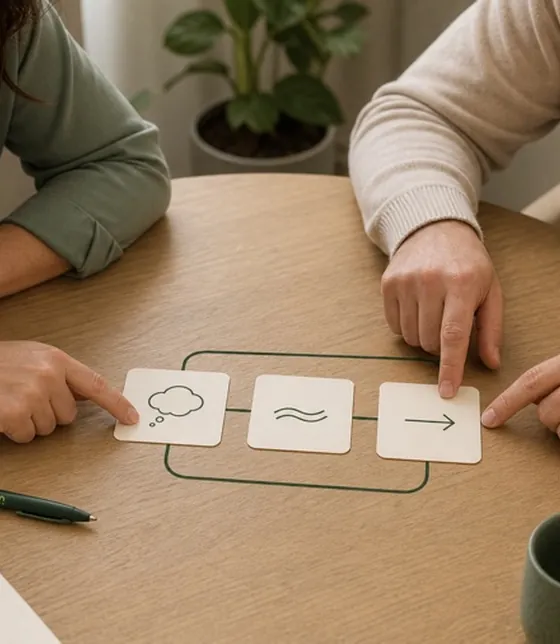 Read with intention













 Meet the clinicians
What happened to you wasn't your fault.
Trauma can keep the past feeling present. With safe, evidence-based therapy, at a pace you control, those memories can lose their grip. In Parramatta or online, usually after a free triage.
Trauma lives in the body, not the calendar.
It can surface long after the event, through the body, sleep, and the things you avoid. You don't need to tick every box to reach out.
- Memories, images or flashbacks intrude when you least expect them.
- You avoid the places, people or reminders that bring it all back.
- You feel on guard, jumpy, or startle easily, bracing for danger.
- Sleep is broken by nightmares, or you struggle to switch off at all.
- You feel numb or cut off, from people or from your own feelings.
- Sudden anger or tears arrive without much warning.
- Your body holds the tension: tight chest, racing heart, a knot in the stomach.
- You've been told to "move on," and it has never once helped.
If the past is getting in the way of your present, that's reason enough. Trauma responds well to the right therapy, and you never have to retell more than you choose to.


Paced, collaborative and evidence-based.
Trauma work always starts with safety and stability. Your psychologist draws on evidence-based approaches, and never moves faster than you're ready for.
EMDR
Eye-movement desensitisation and reprocessing: helping memories lose their present-day charge.
Trauma-focused CBT
Gently making sense of what happened and the beliefs it left behind, building a coherent, less distressing narrative.
Stabilisation & grounding
Practical skills to settle the nervous system and feel safe in the present. That is the foundation before any deeper work.
Schema therapy
For trauma with deep roots, working with the long-standing patterns it created in how you see yourself and others.
We review your goals together regularly, so you always know where therapy is heading, and you can pause or stop at any time.
If home does not feel safe.
Domestic and family violence includes physical, sexual, emotional and financial abuse, and coercive control. Our clinicians can help you make sense of what has happened and support you with its effects, at your pace.
- Your safety comes first. We can talk about a safety plan and other services that can help.
- You decide what to share, and when.
- Couples sessions are not offered where one partner is afraid of the other.
- If telehealth would not be private at home, tell us and we will find another way.
In an emergency, call 000. 1800RESPECT (1800 737 732) offers confidential advice and support, 24 hours a day.

Your first weeks, step by step.
No surprises, no pressure. Here's how the early sessions usually unfold.
- 1
Mostly a conversation
Your psychologist asks what's been happening and what you'd like to change. You only go as far as you're comfortable, and together you'll sketch a plan.
Session one - 2
Safety & stability first
Before any trauma processing, you'll build grounding skills and a sense of safety, so the deeper work, when it comes, is something you can handle.
Sessions two to four - 3
Processing, at your pace
When you're ready, you'll process the memories themselves with EMDR or trauma-focused CBT. Always in control, always able to pause. Progress is checked against your goals.
Ongoing
Know your costs before you start.
We confirm your fee and any rebate in writing before your first session. If a funding body covers you, we bill them directly wherever possible.
See fees- Medicare: rebates on up to 10 sessions a year with a Mental Health Treatment Plan from your GP.
- NDIS, DVA, Workers Comp & CTP: usually no out-of-pocket cost when approved.
- Private health: claim through your extras cover, with no referral needed.
Meet our clinicians.

Bülent Ada
Principal Psychologist & Director
Anxiety · Trauma

Sijal Ansari
Clinical Psychologist
Trauma · PTSD

Shahim Ahmad
Clinical Psychologist
Stress · Anxiety

Irfan Yigit
Senior Consultant Psychologist
Anxiety · Depression

Elizabeth Lee
Clinical Psychotherapist · Independent practice
Trauma · Anxiety

Shareen Birges
Counselling Social Worker (AASW) · Independent practice
Trauma · Grief

Annette Haggerty
Consultant Psychologist
Anxiety · Depression

Taline Bardakjian
Consultant Psychologist
Anxiety · Sleep

Mohan Shankarappa
Clinical Psychologist
Depression · Mood

Michael L. T. Cheung
Consultant Psychologist
Stress · Couples

Steve Sutton
Counselling Psychologist · Independent practice
Relationships · Grief

Bill Singh
Consultant Psychologist · Independent practice
Anxiety · Depression



More ways we can help.
Check in with yourself.
Free, private tools to try before or alongside sessions. They are not a diagnosis.
Free · 5 to 10 min
Take the Mind Health Check
Short questionnaires, scored privately in your browser. We have ticked the ones most related to this page, and you can change them.
Fact sheet: Trauma and PTSD
A plain-language guide with practical steps. Free to download.
Try this week
- Keep a regular sleep and wake time, even on weekends.
- Practise one grounding skill: name five things you can see and four you can hear.
- Write down the reminders you avoid, to talk through with your clinician.
Need help now? Our urgent help page has who to call, day and night.
Things people ask before booking.
Do I need a referral for trauma therapy?
Will I have to retell my trauma in detail?
Is telehealth as good as coming in?
What is EMDR, and does it actually work?
Do I have to talk about the trauma to keep it private?
Can I get Medicare rebates for trauma therapy?
How many sessions will I need?
What if talking about it makes me feel worse?
How EMDR works
Reprocessing a hard memory, safely and at your pace
EMDR uses gentle left-right stimulation while you stay anchored in the present, so a distressing memory can lose its charge. You stay in control of the pace the whole way through.
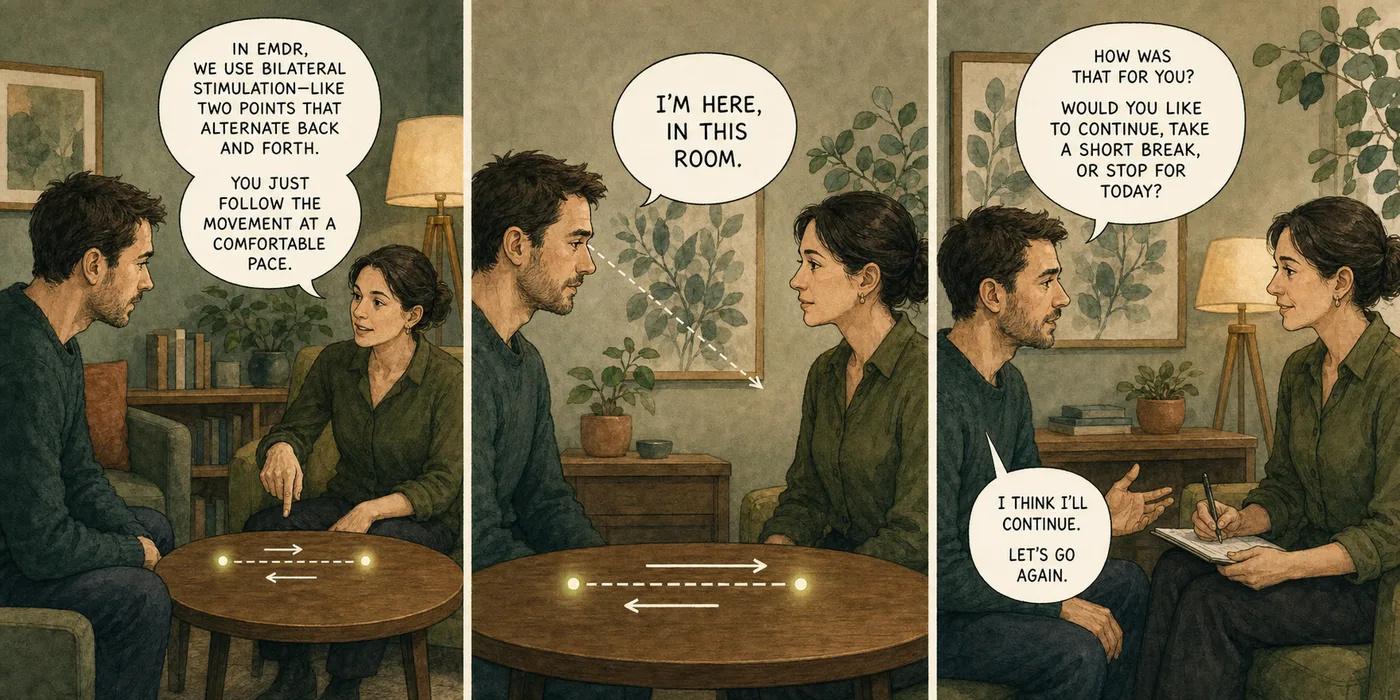

Healing happens at your pace.
When you’re ready, we’ll match you with a trauma-trained psychologist.
Talk to us
How can we help?
Fees & rebatesFind a psychologistMind Health CheckReferring a clientWorkplaces & EAP
If you need support right now Lifeline 13 11 14 · Suicide Call Back 1300 659 467 · 13YARN 13 92 76 · Emergency 000. Available 24/7 — this panel isn't.
We'll call you back on the number you gave us within one business day. If it's urgent, call 1300 084 200.

Follow the circle. Breathe in as it grows, out as it settles. Nothing else to do.
That calm you just found is always within reach. When you'd like someone alongside you, we're here.