 The referral pathways guide



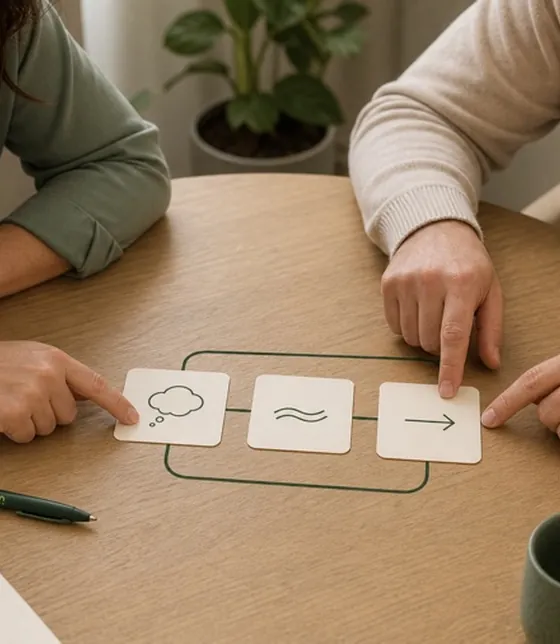 Read with intention













 Meet the clinicians
Anxiety treatment. Starting with a conversation.
When worry runs the show, the smallest things get heavy. Evidence-based therapy with a psychologist who gets it, in Parramatta or online, usually after a free triage.
Anxiety doesn't always look like worry.
It shows up in the body, in the avoiding, in the over-preparing. You don't need to tick every box to reach out.
- Your mind races at night, replaying the day or rehearsing tomorrow.
- You avoid calls, drives and gatherings to keep the feeling away.
- You feel it in your body: a tight chest, a racing heart, a tense jaw or stomach.
- You over-prepare, double-check, and still feel it's not enough.
- "What if" thoughts arrive uninvited and refuse to leave.
If it's getting in the way of your life, that's reason enough. Anxiety is one of the most treatable things we work with, and you don't have to wait until it's unbearable to start.

Evidence-based, tailored to you.
Your psychologist draws on these approaches for your situation, and explains the reasoning as you go.
CBT
Cognitive behaviour therapy: noticing the thinking patterns that feed anxiety, and testing kinder, more accurate ones.
Exposure therapy
Gradually and safely approaching what you've been avoiding, at a pace you agree to. Never sprung on you.
ACT
Acceptance and commitment therapy: making room for difficult feelings while moving toward what matters to you.
EMDR
For anxiety rooted in difficult past experiences: working through the memories behind it, at a pace you can manage.
We review your goals together regularly, so you always know where therapy is heading, and you can pause or stop at any time.
Your first weeks, step by step.
- 1
Mostly a conversation
Your psychologist asks what's been happening and what you'd like to change. You only go as far as you're comfortable.
Session one - 2
Understanding your anxiety
You'll map when anxiety shows up and what keeps it going, then practise specific skills between sessions.
Sessions two to four - 3
Reviewing together
Progress is checked against your goals, not a fixed program. Some people come for six sessions, others longer. It's always your call, made with clear information.
Ongoing
Read more about a specific worry.
Know your costs before you start.
We confirm your fee and any rebate in writing before your first session. If a funding body covers you, we bill them directly wherever possible.
See fees- Medicare: rebates on up to 10 sessions a year with a Mental Health Treatment Plan from your GP. How Medicare works
- NDIS, DVA, Workers Comp & CTP: usually no out-of-pocket cost when approved.
- Private health: claim through your extras cover, with no referral needed.
Meet our clinicians.

Bülent Ada
Principal Psychologist & Director
Anxiety · Trauma

Sijal Ansari
Clinical Psychologist
Trauma · PTSD

Taline Bardakjian
Consultant Psychologist
Anxiety · Sleep

Mohan Shankarappa
Clinical Psychologist
Depression · Mood

Michael L. T. Cheung
Consultant Psychologist
Stress · Couples

Shahim Ahmad
Clinical Psychologist
Stress · Anxiety

Irfan Yigit
Senior Consultant Psychologist
Anxiety · Depression



Check in with yourself.
Free, private tools to try before or alongside sessions. They are not a diagnosis.
Free · 5 to 10 min
Take the Mind Health Check
Short questionnaires, scored privately in your browser. We have ticked the ones most related to this page, and you can change them.
Fact sheet: Understanding anxiety
A plain-language guide with practical steps. Free to download.
Try this week
- Practise slow breathing for two minutes a day.
- Write worries down at a set time, rather than carrying them all day.
- Take one small step towards something you have been avoiding.
Need help now? Our urgent help page has who to call, day and night.
Things people ask before booking.
Do I need a referral to start anxiety treatment?
How quickly will therapy help my anxiety?
Is telehealth as good as coming in?
Will I have to face my fears straight away?
Will my psychologist think my worries are irrational?
Is it anxiety or just stress?
Do you treat panic attacks?
A moment in the room
Turning down an alarm that fires too often
We help your nervous system relearn that everyday situations are safe, so anxiety can rise, peak and pass.
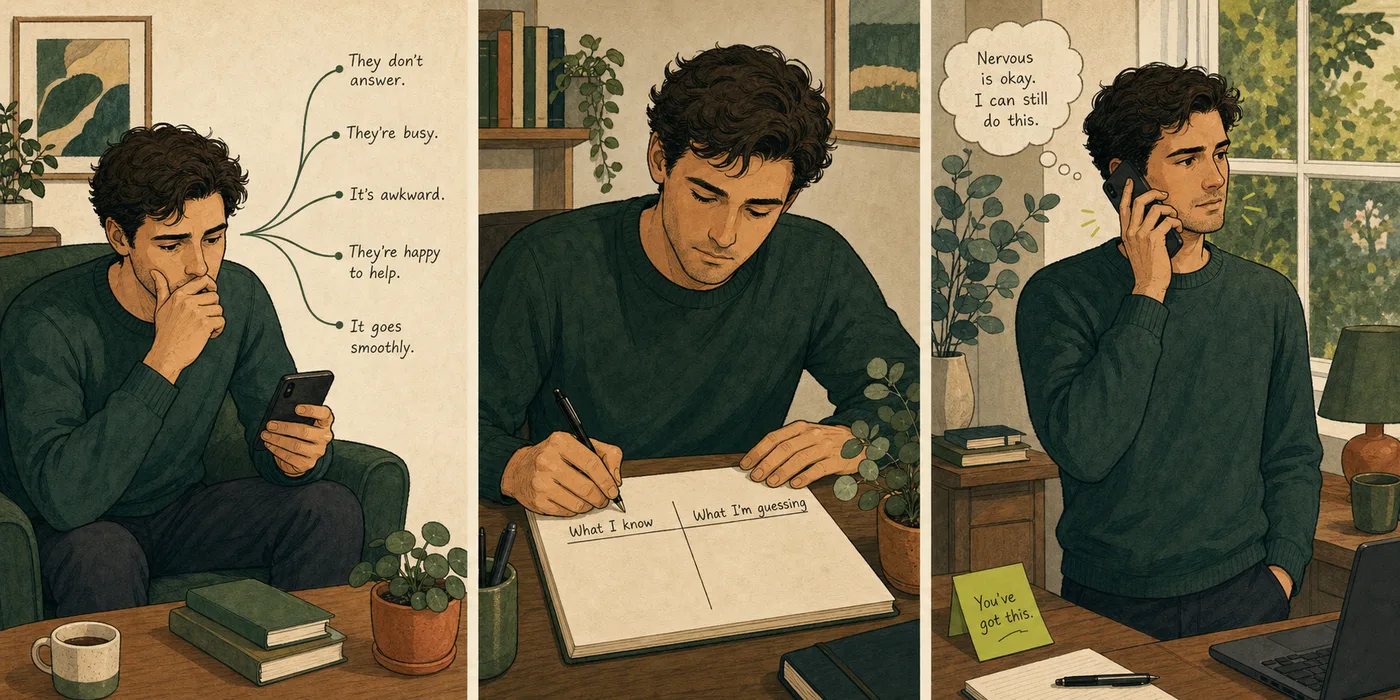

Anxiety doesn’t have to run the show.
Tell us what’s going on and we’ll match you with a psychologist who works with anxiety every day, usually after a free triage. No referral needed to begin.
