 The referral pathways guide



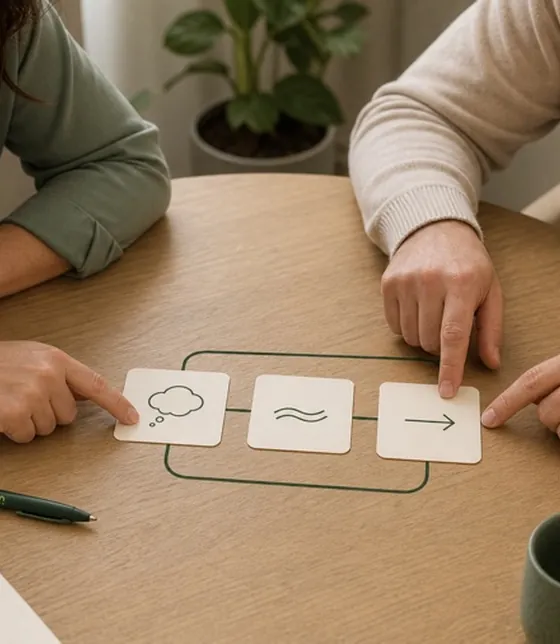 Read with intention













 Meet the clinicians
Couples therapy that rebuilds the us.
When the same argument keeps coming back, it's rarely about the dishes. Structured, judgement-free couples work in Parramatta or online, with a psychologist trained to keep it fair.
Distance rarely arrives all at once.
It builds in small moments, in conversations avoided and repair attempts missed. You don't need a crisis to come in.
- The same argument loops, no matter where it starts.
- You feel more like housemates than partners lately.
- Small comments land like criticism, and defences go up fast.
- One of you pursues the conversation; the other shuts down.
- Trust took a hit, and you're unsure how to rebuild it.
- Big decisions about kids, money and family keep getting deferred.
- Affection and intimacy have quietly gone missing.
- You still care, and that's exactly why it hurts.
Wanting it to be better is enough of a reason. Couples who start earlier tend to need fewer sessions, and even long-standing patterns can change with the right structure.

Structured, fair, and practical.
This isn't refereed arguing. Your psychologist uses evidence-based approaches for relationships, and both of you always know what the plan is.
Gottman Method
Research-built tools for de-escalating recurring conflict, rebuilding fondness and making repair attempts that actually land.
Emotionally Focused Therapy
EFT looks under the argument at the attachment needs driving it. The cycle itself, not your partner, becomes the problem you solve together.
Communication skills
Concrete, practised skills for raising issues softly, listening without loading a reply, and repairing quickly after a rupture.
Individual sessions
Sometimes one-on-one sessions run alongside the couples work, for the old wounds, anger or anxiety that each partner brings into the room.
Progress is reviewed against goals you both set, and everything discussed stays in the room.
Your first weeks, step by step.
No surprises, no pressure. Here's how the early sessions usually unfold.
- 1
You both get heard
The first session maps the story of the relationship, from how you met to what changed and what each of you wants back. No blame, no verdicts.
Session one - 2
Seeing the cycle
Together you'll name the pattern that keeps repeating (who pursues, who withdraws, what triggers it) and start practising small changes between sessions.
Sessions two to four - 3
Rebuilding on purpose
Progress is checked against goals you both agreed on. Some couples come for six sessions, others longer. The pace and the destination stay yours.
Ongoing
Know your costs before you start.
We confirm your fee and any rebate in writing before your first session. If a funding body covers you, we bill them directly wherever possible.
See fees- Medicare: no rebate for couples or family therapy. Medicare covers individual sessions only. Private health extras often do; your fund can tell you what your cover pays.
- NDIS, DVA, Workers Comp & CTP: usually no out-of-pocket cost when approved.
- Private health: claim through your extras cover, with no referral needed.
Meet our clinicians.








More ways we can help.
Things people ask before booking.
Does Medicare cover couples therapy?
How long is a session?
What if my partner won't come?
Will the psychologist take sides?
Is it too late for us?
Can we do sessions online?
How many sessions will we need?
Do you help couples who are separating?
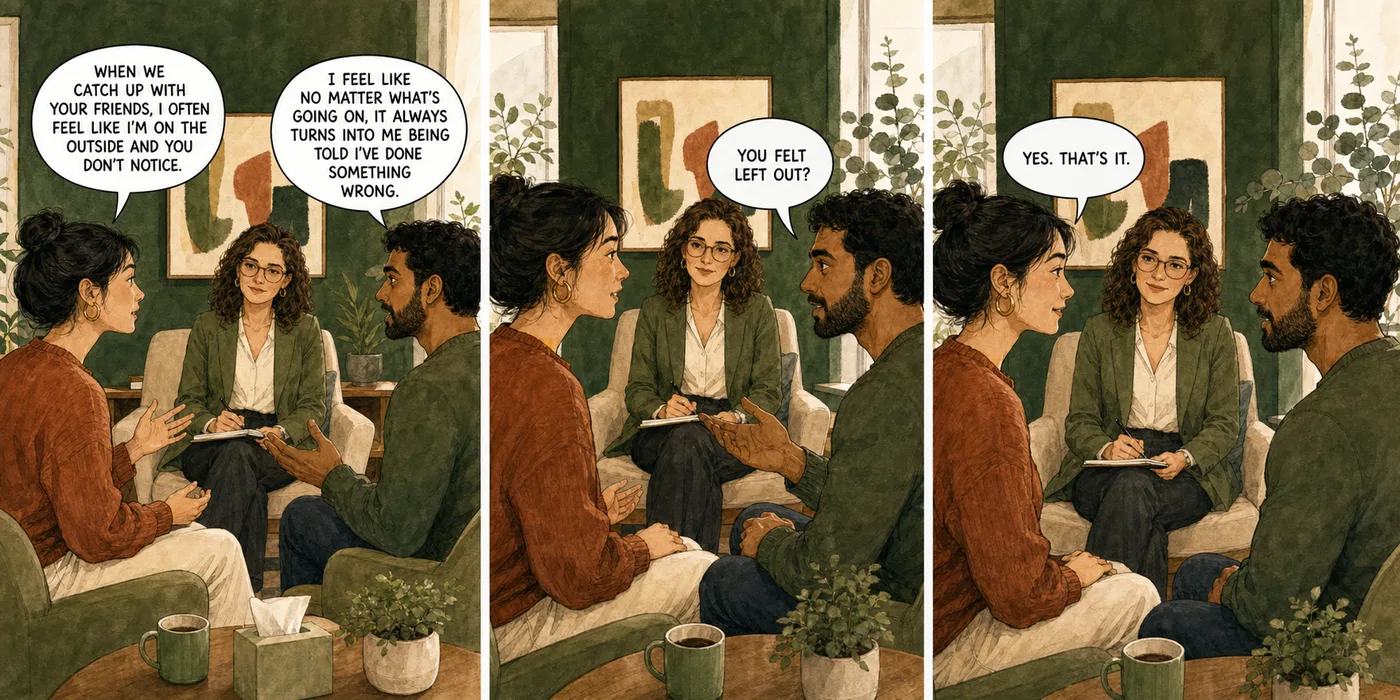
Being heard, together
Sometimes the shift starts with feeling understood
Choose each other, again.
Tell us a little about where things are at, and we'll match you both with the right psychologist, usually after a free triage. No referral needed.
