 The referral pathways guide



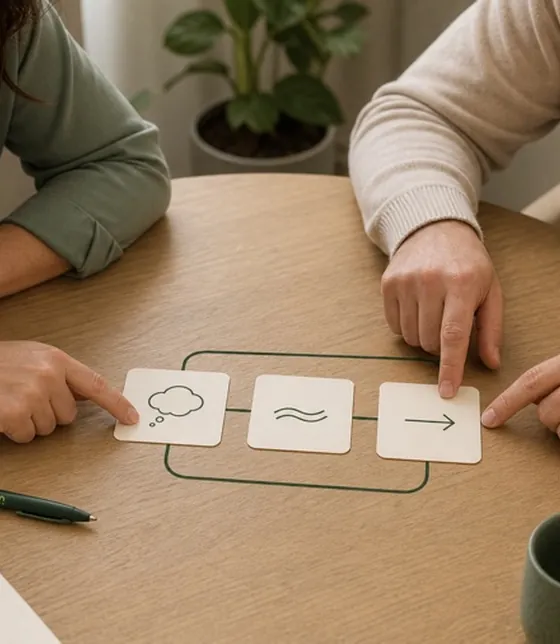 Read with intention













 Meet the clinicians
Good sleep is a skill you can learn.
If nights have become a battle, you're not broken, and sleeping pills aren't the only answer.
The harder you try, the worse it gets.
Sleep is one of the few things effort makes worse. You don't need to tick every box to reach out.
- Your mind switches on the moment your head hits the pillow.
- You lie awake for hours, watching the clock and doing the maths on lost sleep.
- You wake at 3am and can't get back to sleep, no matter what you try.
- You've tried every app, supplement and "sleep hack," and nothing has stuck.
- You're foggy, irritable and flat during the day from running on empty.
- You dread bedtime, because you already know how the night will go.
- You rely on screens, scrolling or a drink to wind down, but it isn't working.
- You've been told to "just have better sleep hygiene," and it has never once helped.

CBT-I, and the science of rest.
Your psychologist tailors CBT-I to your nights, and explains the why as you go.
CBT-I
Cognitive behavioural therapy for insomnia is what clinical guidelines recommend first, retraining your body's sleep drive and timing.
Calming the racing mind
Techniques for the 2am thought-spiral, so that bed stops being the place your mind comes alive.
Wind-down & rhythm
A realistic wind-down routine and steady body clock that signals sleep, built without rigid rules.
Treating the root
Addressing the anxiety, stress or low mood that often sits underneath disturbed sleep.
We review your goals together regularly, so you always know where therapy is heading, and you can pause or stop at any time.
Your first weeks, step by step.
Here's how the early sessions usually unfold.
- 1
Mostly a conversation
Your psychologist asks what's been happening and what you'd like to change. You only go as far as you're comfortable, and together you'll sketch a plan.
Session one - 2
A sleep diary & plan
You'll track your nights for a week or two, then build a personalised CBT-I plan of small, specific changes that rebuild your sleep drive.
Sessions two to four - 3
Reviewing together
Progress is checked against your goals, not a fixed program. Some people come for six sessions, others longer. It's always your call.
Ongoing
- A poor nightSleep is short or broken.
- Worry about sleep"How will I cope tomorrow?"
- Trying harderGoing to bed early, lying in, napping.
- A busy, alert mindThe bed becomes linked with being awake.
Know your costs before you start.
We confirm your fee and any rebate in writing before your first session. If a funding body covers you, we bill them directly wherever possible.
See fees- Medicare: rebates on up to 10 sessions a year with a Mental Health Treatment Plan from your GP.
- NDIS, DVA, Workers Comp & CTP: usually no out-of-pocket cost when approved.
- Private health: claim through your extras cover, with no referral needed.
Meet our clinicians.

Bülent Ada
Principal Psychologist & Director
Anxiety · Trauma

Taline Bardakjian
Consultant Psychologist
Anxiety · Sleep

Sijal Ansari
Clinical Psychologist
Trauma · PTSD

Mohan Shankarappa
Clinical Psychologist
Depression · Mood

Michael L. T. Cheung
Consultant Psychologist
Stress · Couples

Shahim Ahmad
Clinical Psychologist
Stress · Anxiety

Annette Haggerty
Consultant Psychologist
Anxiety · Depression


More ways we can help.
Check in with yourself.
Free, private tools to try before or alongside sessions. They are not a diagnosis.
Free · 5 to 10 min
Take the Mind Health Check
Short questionnaires, scored privately in your browser. We have ticked the ones most related to this page, and you can change them.
Fact sheet: Better sleep
A plain-language guide with practical steps. Free to download.
Try this week
- Get up at the same time every day, even after a bad night.
- If you are awake for a long time, get up and do something calm until you feel sleepy.
- Keep your bed for sleep and intimacy only.
Need help now? Our urgent help page has who to call, day and night.
Things people ask before booking.
Do I need a referral for help with sleep?
What is CBT-I?
Is telehealth as good as coming in?
Will I have to give up coffee and screens?
Is what I discuss kept private?
Can I get Medicare rebates for insomnia treatment?
How long does CBT-I take?
Should I see my GP first?
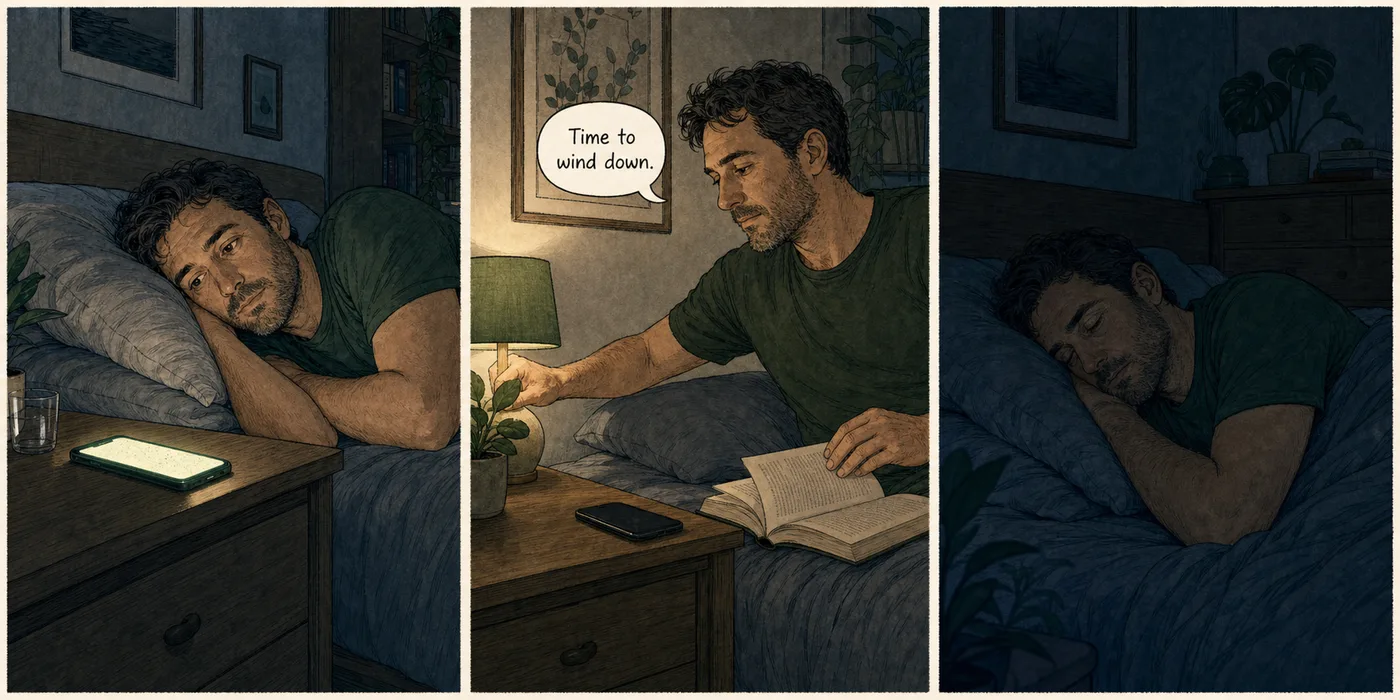
Winding down
Working with your body, not against it
A calm, screen-light hour and a steady wake time tell your body it’s safe to switch off: the foundations of CBT-I.

Better nights start with a plan.
Tell us how you’re sleeping and we’ll match you with a psychologist trained in CBT-I.
Talk to us
How can we help?
Fees & rebatesFind a psychologistMind Health CheckReferring a clientWorkplaces & EAP
If you need support right now Lifeline 13 11 14 · Suicide Call Back 1300 659 467 · 13YARN 13 92 76 · Emergency 000. Available 24/7 — this panel isn't.
We'll call you back on the number you gave us within one business day. If it's urgent, call 1300 084 200.

Follow the circle. Breathe in as it grows, out as it settles. Nothing else to do.
That calm you just found is always within reach. When you'd like someone alongside you, we're here.