 The referral pathways guide



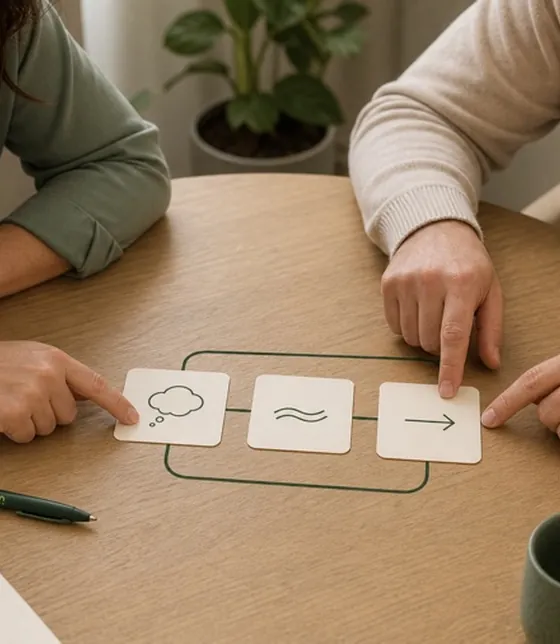 Read with intention













 Meet the clinicians
Addiction support, without judgement.
Alcohol, other drugs, gambling, or a habit that has taken over: change is possible, and you don't need it all worked out first. Confidential help in Parramatta or online.
Addiction rarely arrives all at once.
It builds quietly, as a way to cope that slowly asks for more. You do not need to tick every box, or hit any kind of rock bottom, to reach out.
- You have tried to cut back or stop, and it has not held.
- It takes more than it used to for the same effect.
- The craving or urge is loud, and hard to sit with.
- It is costing you money, sleep, work, or the people you love.
- You use to take the edge off stress, low mood or memories.
- You have started hiding how much, or how often.
- Stopping brings on withdrawal: restlessness, shakes, irritability.
- A part of you wants to change, and a part of you is not sure.
Mixed feelings are normal. It is possible to want change and feel unsure at the same time. Addiction is a health issue, not a failure of willpower. If use ever feels unsafe for you or someone else, our urgent help page lists people you can talk to right now.
Evidence-based, and paced to you.
There is no single path out of addiction. Your psychologist draws on evidence-based approaches for your situation, and explains the reasoning as you go.
CBT
Cognitive behaviour therapy helps you notice the triggers, thoughts and situations that drive use, and build responses that serve you better.
Motivational interviewing
A calm, judgement-free way to work through mixed feelings about change and find the reasons that matter to you.
ACT
Acceptance and commitment therapy makes room for cravings and hard feelings while you move toward the life you want.
Relapse prevention
Mapping high-risk moments and planning for them in advance, plus distress-tolerance skills for when the urge is loud.
We work at your pace and toward your goals, whether that means stopping, cutting back or staying safer. With your consent we can work alongside your GP, a specialist service or a support group so everyone is pulling the same way.
Your first weeks, step by step.
No lectures, no pressure. Here is how the early sessions usually unfold.
- 1
Mostly a conversation
Your psychologist asks what has been happening and what you would like to be different. You go only as far as you are comfortable, and together you sketch a plan.
Session one - 2
Understanding the pattern
You map when the urge shows up, what it does for you, and what keeps it going. Then you start practising specific skills between sessions.
Sessions two to four - 3
Reviewing together
Progress is checked against your goals, not a fixed program. Where it helps, and always with your consent, we can involve your GP or family.
Ongoing

Know your costs before you start.
We confirm your fee and any rebate in writing before your first session. If a funding body covers you, we bill them directly wherever possible.
See fees- Medicare: rebates on up to 10 sessions a year with a Mental Health Treatment Plan from your GP.
- NDIS, DVA, Workers Comp & CTP: usually no out-of-pocket cost when approved.
- Private health: claim through your extras cover, with no referral needed.
Meet our clinicians.

Bülent Ada
Principal Psychologist & Director
Anxiety · Trauma

Annette Haggerty
Consultant Psychologist
Anxiety · Depression

Sijal Ansari
Clinical Psychologist
Trauma · PTSD

Mohan Shankarappa
Clinical Psychologist
Depression · Mood

Michael L. T. Cheung
Consultant Psychologist
Stress · Couples

Shahim Ahmad
Clinical Psychologist
Stress · Anxiety

Irfan Yigit
Senior Consultant Psychologist
Anxiety · Depression


Check in with yourself.
Free, private tools to try before or alongside sessions. They are not a diagnosis.
Free · 5 to 10 min
Take the Mind Health Check
Short questionnaires, scored privately in your browser. We have ticked the ones most related to this page, and you can change them.
Try this week
- Notice the times, places and feelings that come before using.
- Plan one alternative for your most common trigger.
- Tell one person you trust that you are making a change.
Need help now? Our urgent help page has who to call, day and night.
Things people ask before booking.
Do I need a referral to start?
Do I have to stop using before I come in?
Is what I share confidential?
Can therapy work alongside my GP or a program?
Can I get Medicare rebates for addiction treatment?
Do you help with gambling, gaming or other behavioural addictions?
Can my family get support too?
What if I need help right now?

Change is possible, one step at a time.
Tell us what is going on and we will match you with a psychologist who works with addiction, usually after a free triage. No referral needed to begin, and no judgement when you arrive.
Talk to us
How can we help?
Fees & rebatesFind a psychologistMind Health CheckReferring a clientWorkplaces & EAP
If you need support right now Lifeline 13 11 14 · Suicide Call Back 1300 659 467 · 13YARN 13 92 76 · Emergency 000. Available 24/7 — this panel isn't.
We'll call you back on the number you gave us within one business day. If it's urgent, call 1300 084 200.

Follow the circle. Breathe in as it grows, out as it settles. Nothing else to do.
That calm you just found is always within reach. When you'd like someone alongside you, we're here.