 The referral pathways guide



 Read with intention













 Meet the clinicians
Health anxiety, gently untangled.
Health anxiety is ongoing worry about serious illness that tests and reassurance don't settle. Checking brings relief for a while, then the worry returns. Psychology can help you step out of that loop.
When worry takes over.
Common signs include:
Checking and searching
Checking your body for changes, or searching symptoms online, often for long stretches.
Seeking reassurance
Asking family, friends or doctors for reassurance, which helps briefly and then fades.
Noticing every sensation
Ordinary sensations, such as a twinge or a headache, start to feel like warning signs.
Avoiding reminders
Avoiding doctors, news or talk about illness, or the opposite: frequent appointments and tests.
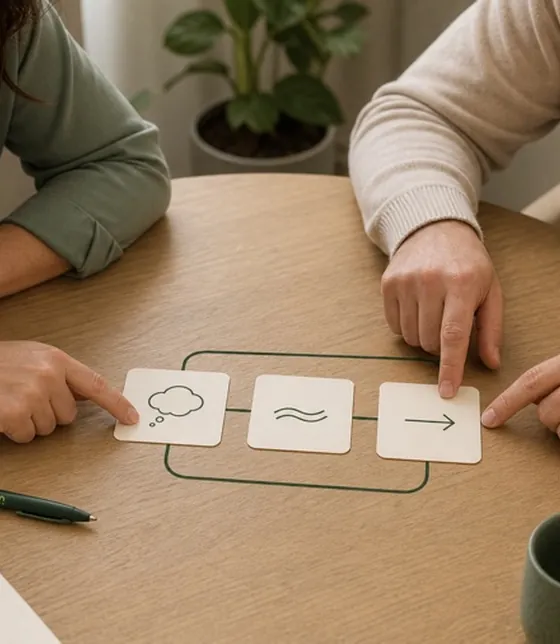
- Noticing a sensationA twinge, a headache or a change in the body.
- A worrying thought"What if this is something serious?"
- Checking or reassuranceSearching, checking the body or asking others.
- Brief reliefThe doubt returns, and attention on the body grows.
Out of the loop.
- Understanding how worry, checking and reassurance keep each other going
- Looking at how you read body sensations, and trying other explanations
- Gradually cutting back checking and reassurance, at a pace you agree
- Making room for uncertainty, so the worry has less pull
CBT for health anxiety is the approach our clinicians most often use, sometimes alongside ACT. See also worry and OCD, which can look similar.
How it usually runs.
Sessions are 50 minutes, in Parramatta or by telehealth.
- 1
Understanding the worry
Your psychologist asks what the worry is about, what sets it off and what you do when it does.
Early sessions - 2
Trying things differently
Together you plan small changes to checking and reassurance, and look at what happens.
The sessions that follow - 3
Practice between sessions
Short exercises to try at home, which you go through together at the next session.
Ongoing

Clinicians who can help.
These clinicians list health anxiety among their areas of practice.


Fees and other options.
With a Mental Health Treatment Plan from your GP, Medicare pays a rebate for each individual session and there is usually a gap. Our fees are set out before you book.
Check in with yourself.
Free, private tools to try before or alongside sessions. They are not a diagnosis.
Free · 5 to 10 min
Take the Mind Health Check
Short questionnaires, scored privately in your browser. We have ticked the ones most related to this page, and you can change them.
Fact sheet: Health anxiety
A plain-language guide with practical steps. Free to download.
Try this week
- Notice how often you check or search in a day, without trying to change it yet.
- Delay one check by ten minutes, and notice what happens to the urge.
- Choose one trusted source and one time of day for health questions.
Need help now? Our urgent help page has who to call, day and night.
Before you book, answered.
What is health anxiety?
How is it different from being careful about my health?
Is health anxiety the same as hypochondria?
What if there really is something wrong?
When should I seek help?
How long does treatment take?
Do I need a referral?
Can I have sessions by telehealth?

Take the first step, at your pace.
Tell us a little about what is going on. We will suggest a clinician and a time.
