 The referral pathways guide



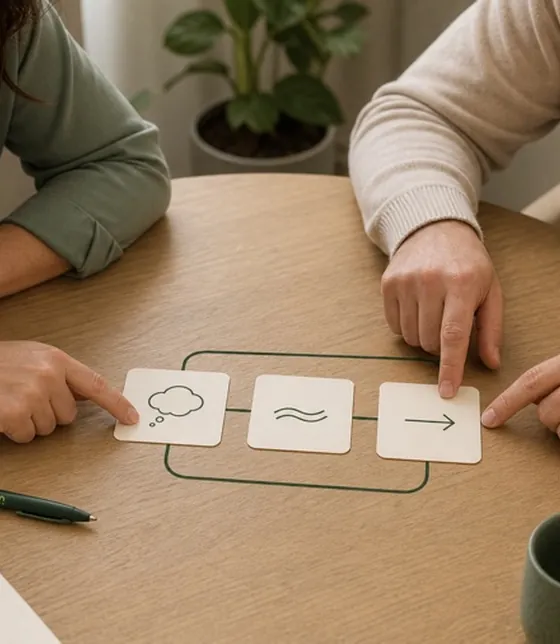 Read with intention













 Meet the clinicians
Depression lifts. With the right help.
When everything feels heavy and grey, getting started is the hardest part. Evidence-based therapy with a psychologist who gets it, in Parramatta or online, usually after a free triage.
Depression doesn't always look like sadness.
Sometimes it's numbness, irritability, or just going through the motions. You don't need to tick every box to reach out.
- The things you used to enjoy feel flat, distant, or like too much effort.
- Getting out of bed, showering, or replying to a message feels enormous.
- You're exhausted no matter how much you sleep, or you can't sleep at all.
- A harsh inner voice tells you you're failing, or that you're a burden.
- You're more irritable or tearful than usual, or it's hard to concentrate.
If this has lasted more than a couple of weeks, that's reason enough. Depression is highly treatable, and reaching out when it feels hardest is the bravest, most useful thing you can do.

Evidence-based, tailored to you.
Your psychologist draws on these approaches for your situation, and explains the reasoning as you go.
CBT
Cognitive behaviour therapy: untangling the harsh, hopeless thinking that feeds low mood, and building more balanced views.
Behavioural activation
Gently rebuilding activity and small wins, because with depression, action comes before motivation, not after it.
ACT
Acceptance and commitment therapy: making room for difficult feelings while moving toward what matters to you.
IPT
Interpersonal therapy: working through the relationships, roles and losses that so often sit underneath depression.
We review your goals together regularly, so you always know where therapy is heading, and you can pause or stop at any time.
Your first weeks, step by step.
- 1
Mostly a conversation
Your psychologist asks what's been happening and what you'd like to change. You only go as far as you're comfortable.
Session one - 2
Understanding your low mood
You'll map what lifts and lowers your mood, then build small, doable changes between sessions.
Sessions two to four - 3
Reviewing together
Progress is checked against your goals, not a fixed program. Some people come for six sessions, others longer. It's always your call, made with clear information.
Ongoing
Know your costs before you start.
We confirm your fee and any rebate in writing before your first session. If a funding body covers you, we bill them directly wherever possible.
See fees- Medicare: rebates on up to 10 sessions a year with a Mental Health Treatment Plan from your GP. How Medicare works
- NDIS, DVA, Workers Comp & CTP: usually no out-of-pocket cost when approved.
- Private health: claim through your extras cover, with no referral needed.
Meet our clinicians.

Bülent Ada
Principal Psychologist & Director
Anxiety · Trauma

Mohan Shankarappa
Clinical Psychologist
Depression · Mood

Shahim Ahmad
Clinical Psychologist
Stress · Anxiety

Irfan Yigit
Senior Consultant Psychologist
Anxiety · Depression

Bill Singh
Consultant Psychologist · Independent practice
Anxiety · Depression

Elizabeth Lee
Clinical Psychotherapist · Independent practice
Trauma · Anxiety

Annette Haggerty
Consultant Psychologist
Anxiety · Depression



More ways we can help.
Check in with yourself.
Free, private tools to try before or alongside sessions. They are not a diagnosis.
Free · 5 to 10 min
Take the Mind Health Check
Short questionnaires, scored privately in your browser. We have ticked the ones most related to this page, and you can change them.
Fact sheet: Understanding depression
A plain-language guide with practical steps. Free to download.
Try this week
- Plan one small activity you used to enjoy, and do it even if you do not feel like it.
- Get outside in daylight for ten minutes.
- Reach out to one person this week.
Need help now? Our urgent help page has who to call, day and night.
Things people ask before booking.
How do I know if it's depression or just a rough patch?
Do I need a referral to start?
How many sessions will I need?
What if I don't have the energy for therapy?
Will I need medication as well?
Is telehealth as good as coming in?
Do you also help with grief or bipolar disorder?
What if I can't put into words what's wrong?
What if I'm having thoughts of suicide?

The hardest step is the first one.
When the energy isn’t there, we keep it simple. Tell us what’s going on and we’ll match you with the right psychologist, usually after a free triage.
