 The referral pathways guide



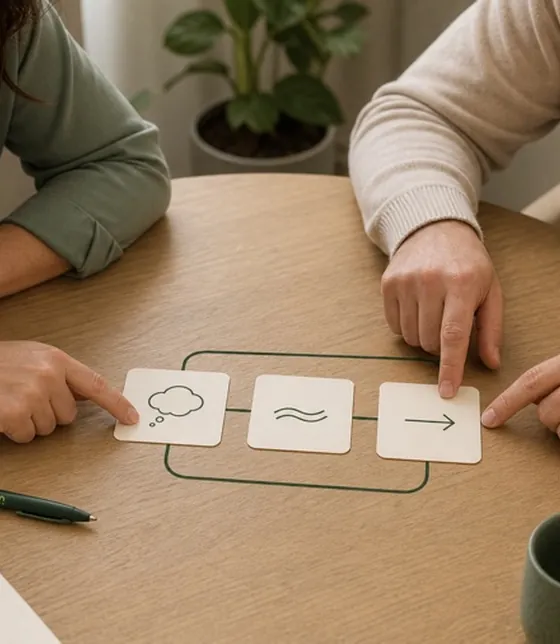 Read with intention













 Meet the clinicians
Grief support, at your own pace.
Grief is a natural response to loss, not an illness to cure. When it’s too heavy to carry alone, talking with a psychologist can help. In Parramatta or online.
Grief doesn’t only look like sadness.
It moves through the body, sleep, concentration and connection. However yours looks, it makes sense. Nor do you need to be “coping badly” to deserve support.
- Waves of sadness arrive without warning, set off by a song, a smell or a date on the calendar.
- You feel numb or far away, moving through the days on autopilot.
- Concentration is gone, so you read the same line five times and remember none of it.
- Sleep and appetite have changed, whether too much, too little or all over the place.
- You avoid the places, photos or people that bring the loss close.
- Anger, guilt or even relief show up, followed by guilt about feeling them at all.
- You keep busy so you don’t have to feel it, until it lands all at once.
- Months on, the world has moved along while you’re still winded.
Grief has no timetable and no correct way to do it, and it isn’t only about bereavement. Separation, a health diagnosis, losing work, a home or a planned future can all set it off. Most people gradually find their footing with time and the people around them. For some, grief stays raw and life keeps shrinking; that’s when a psychologist can help. And if the weight ever tips into not wanting to be here, please don’t carry that alone: our urgent help page lists people you can talk to right now.
No fixing. No rushing. Just real help.
Grief counselling isn’t about getting over the person or the life you lost. It’s about finding a way to carry the loss and keep living, with support from approaches that have good evidence behind them.
Grief counselling
An unhurried, confidential space to tell the story of your loss as many times as it needs telling, to someone who won’t change the subject.
Grief-focused CBT
An evidence-based approach for prolonged grief. When grief gets stuck, it works with the guilt, avoidance and looping thoughts that keep it circling.
Meaning & adjustment
Staying connected to who, and what, you’ve lost while rebuilding the routines, roles and plans the loss upended.
Family sessions
Grief lands differently on every member of a family. Where it helps, partners or family can join sessions, so that no one grieves in parallel silence.
It’s normal to swing between grieving and getting on with life: calmly sorting paperwork one day, undone by a supermarket aisle the next. That back-and-forth isn’t a setback; it’s how healthy grieving works. For a deeper read, see our Journal guide to grief, bereavement and complicated grief.
Living with a serious illness.
A diagnosis of a serious or terminal illness, your own or someone close to you, can bring fear, sadness and grief before any loss has happened. Sessions offer space to talk about what matters, at your pace.
- Making sense of the diagnosis and what it means for you
- Grief that begins before a death, sometimes called anticipatory grief
- Talking with family, and planning for what matters most
- Support for carers and family members
Gentle, from the first hello.
No stages to perform, no schedule to keep. Here’s how it usually unfolds.
- 1
A conversation, at your pace
You don’t need the right words or a composed face. Some people talk about the loss straight away; others start somewhere safer. Your psychologist follows your lead.
Session one - 2
Understanding your grief
Together you’ll look at what the loss has touched, from sleep and guilt to relationships and plans, and build ways through the hardest moments, like anniversaries and firsts.
Early sessions - 3
Finding your footing
Some people come for a handful of sessions around a fresh loss or an anniversary; others stay longer. It’s reviewed together, and it’s always your call.
Ongoing

Know your costs before you start.
We confirm your fee and any rebate in writing before your first session. If a funding body covers you, we bill them directly wherever possible.
See fees- Medicare: rebates on up to 10 sessions a year with a Mental Health Treatment Plan from your GP.
- NDIS, DVA, Workers Comp & CTP: usually no out-of-pocket cost when approved.
- Private health: claim through your extras cover, with no referral needed.
Meet our clinicians.

Bülent Ada
Principal Psychologist & Director
Anxiety · Trauma

Sijal Ansari
Clinical Psychologist
Trauma · PTSD

Steve Sutton
Counselling Psychologist · Independent practice
Relationships · Grief

Shareen Birges
Counselling Social Worker (AASW) · Independent practice
Trauma · Grief

Taline Bardakjian
Consultant Psychologist
Anxiety · Sleep

Mohan Shankarappa
Clinical Psychologist
Depression · Mood

Michael L. T. Cheung
Consultant Psychologist
Stress · Couples

Shahim Ahmad
Clinical Psychologist
Stress · Anxiety

Irfan Yigit
Senior Consultant Psychologist
Anxiety · Depression

Annette Haggerty
Consultant Psychologist
Anxiety · Depression


Check in with yourself.
Free, private tools to try before or alongside sessions. They are not a diagnosis.
Free · 5 to 10 min
Take the Mind Health Check
Short questionnaires, scored privately in your browser. We have ticked the ones most related to this page, and you can change them.
Fact sheet: Grief and loss
A plain-language guide with practical steps. Free to download.
Try this week
- Let the feelings that come be there, without judging them.
- Keep a small routine of meals, sleep and a short walk.
- Share a memory with someone who knew them.
Need help now? Our urgent help page has who to call, day and night.
Things people ask before booking.
Is the way I’m grieving normal?
How soon after a loss should I see someone?
Do I need a referral?
Will counselling make me “move on” from the person I lost?
What if I cry through the whole session?
Does grief counselling work by telehealth?
Can I get Medicare rebates for grief counselling?
How long does grief last?
Carrying it, together
Grief doesn’t follow neat stages. That’s normal.
There’s no right way and no timeline. Support gives grief room to move in its own waves, and helps you carry the loss in a way you can live with.
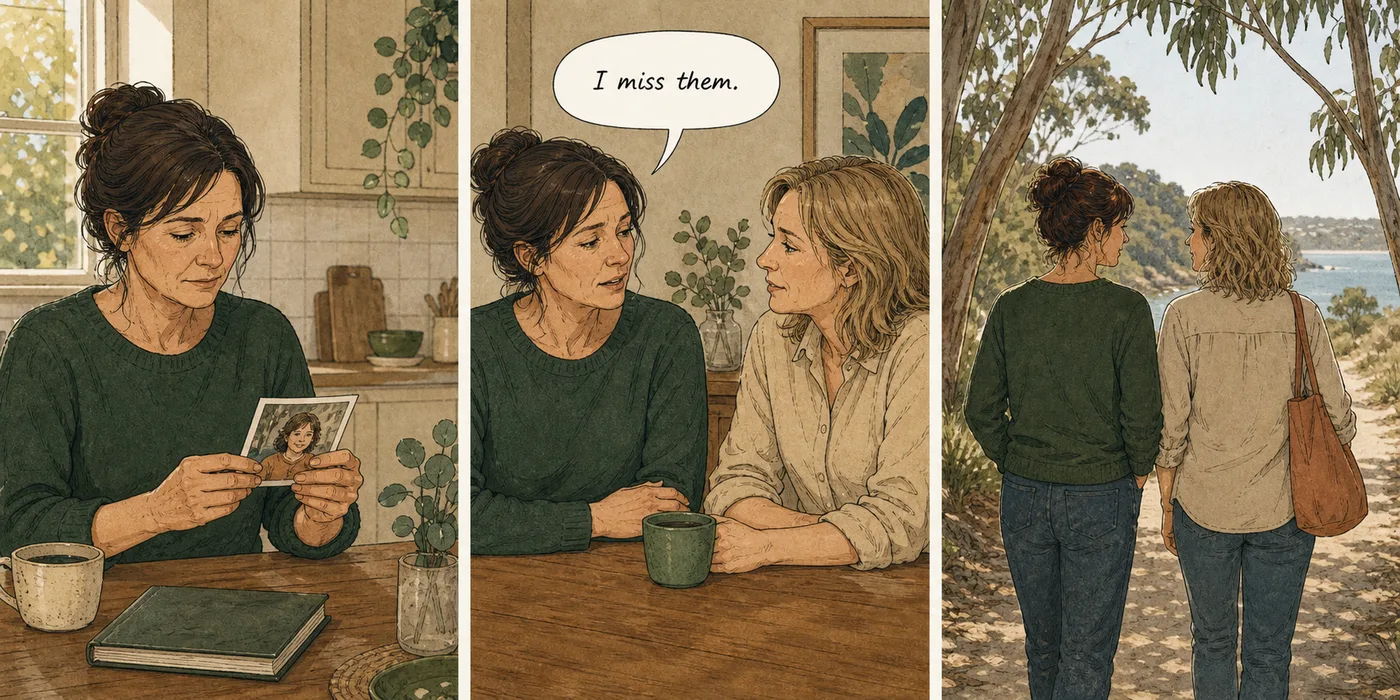

You don’t have to carry this alone.
Tell us a little about your loss and we’ll match you with a psychologist who works with grief, usually after a free triage. No referral needed to begin.
