 The referral pathways guide



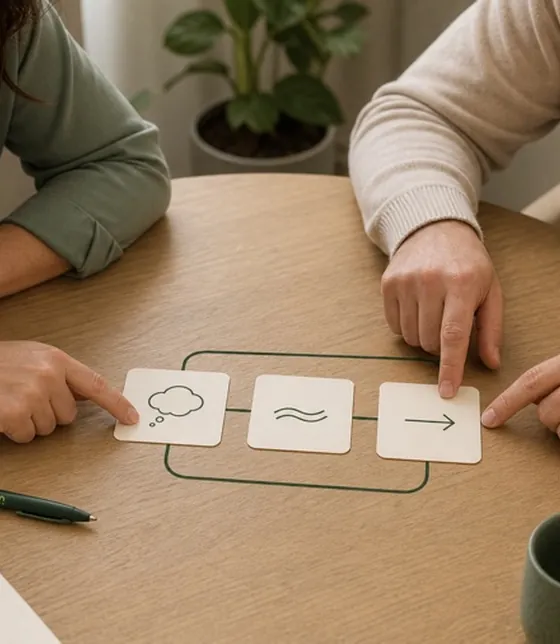 Read with intention













 Meet the clinicians
Build on what's strong, not just what's wrong.
Positive Psychotherapy works with your strengths, meaning and sense of engagement, not by ignoring difficulty, but by actively cultivating the things that help people flourish.
What Positive Psychotherapy helps with
Every plan is tailored to you. This is a guide to where this approach is most often used.
- Depression and low moodRead more
- Low motivation and flatnessRead more
- Loss of meaning or directionRead more
- Building wellbeing and resilienceRead more
- Recovery and relapse preventionRead more
- Personal growthRead more
- Anxiety and everyday stressRead more
- Low self-esteemRead more
- Wellbeing while living with a health condition
- Workplace wellbeingRead more
Not sure if it's the right fit? That's exactly what your first session is for. We'll recommend the approach (or blend of approaches) that suits you.
The approach, step by step.
A clear sense of how the work unfolds, always at your pace.
- 1
Identify your strengths
We uncover your signature strengths and the moments you're at your best, often overlooked when you're struggling.
Early sessions - 2
Cultivate positive experience
Structured practices build gratitude, engagement, positive relationships and meaning into everyday life.
The sessions that follow - 3
Grow resilience
We weave these into lasting habits, so wellbeing becomes something you build, not just hope for.
Ongoing
PPT combines evidence-based positive psychology practices with genuine therapeutic depth. It complements our HEALTHY framework and the P3 program.
Know your costs before you start.
With a Mental Health Treatment Plan from your GP, Medicare rebates apply to individual therapy. We'll always be clear about costs before you begin.
See fees- Medicare: rebates on up to 10 sessions a year with a Mental Health Treatment Plan.
- NDIS, DVA, Workers Comp & CTP: usually no out-of-pocket cost when approved.
- Private health: claim through your extras cover, with no referral needed.

Practitioners who use this approach.




Things people ask before booking.
Is this just about being positive?
Can it be combined with other therapies?
What is Positive Psychotherapy?
What happens in a PPT session?
Can Positive Psychotherapy be done online?
Is Positive Psychotherapy covered by Medicare?
Do I need a referral?
References
- Seligman MEP, Rashid T, Parks AC. (2006). Positive psychotherapy. American Psychologist, 61(8), 774-788. doi.org/10.1037/0003-066X.61.8.774
- Walsh S, Cassidy M, Priebe S. (2017). The application of positive psychotherapy in mental health care: A systematic review. Journal of Clinical Psychology, 73(6), 638-651. doi.org/10.1002/jclp.22368
- Carr A, Cullen K, Keeney C, Canning C, Mooney O, Chinseallaigh E, O'Dowd A. (2021). Effectiveness of positive psychology interventions: A systematic review and meta-analysis. The Journal of Positive Psychology, 16(6), 749-769. doi.org/10.1080/17439760.2020.1818807
Further reading and free tools.
From the Journal
- Positive psychology: Secrets to flourishing in life
- The HEALTHY Mindset: 7 Pillars of Mental Wellness
- What Predicts Life Satisfaction? The Research
Fact sheets
All fact sheets
Your next step starts here.
Tell us what's going on and we'll match you with the right psychologist, usually after a free triage. No referral needed to begin.
Talk to us
How can we help?
Fees & rebatesFind a psychologistMind Health CheckReferring a clientWorkplaces & EAP
If you need support right now Lifeline 13 11 14 · Suicide Call Back 1300 659 467 · 13YARN 13 92 76 · Emergency 000. Available 24/7 — this panel isn't.
We'll call you back on the number you gave us within one business day. If it's urgent, call 1300 084 200.
