

You’ve just received a promotion, delivered a presentation that earned a standing ovation, or been accepted into a program you’ve worked years to qualify for. And yet, instead of basking in a well-earned sense of pride, a quiet, insidious voice in your head whispers: “You just got lucky. It’s only a matter of time before everyone realises you don’t actually know what you’re doing.”
If this sounds familiar, you are in excellent company — and that is not merely a comforting platitude. Research suggests that up to 70% of people will experience imposter syndrome at some point in their lives [1]. This psychological phenomenon, formally known as the Impostor Phenomenon, disproportionately affects high achievers. Despite clear, objective evidence of competence and success, individuals grappling with it remain convinced they are intellectual frauds who have somehow deceived their colleagues, managers, or peers — and that it is only a matter of time before the curtain is pulled back.
Here is the paradox that makes imposter syndrome so clinically fascinating: the more capable you are, the more susceptible you may be. Competent people are acutely aware of how much they do not know. Less competent people, by contrast, often lack the metacognitive sophistication to recognise their own gaps — a well-documented psychological effect known as the Dunning-Kruger phenomenon [2]. In other words, if you feel like an imposter, it is frequently a sign that you are anything but.
The Clinical Reality: What Is Actually Happening in Your Brain?
While imposter syndrome is not a formal psychiatric diagnosis in the DSM-5, it is a well-documented psychological pattern that frequently co-occurs with clinical anxiety, perfectionism, and depression [3]. First identified in 1978 by psychologists Pauline Rose Clance and Suzanne Imes through their clinical work with over 150 high-achieving women, it describes an internal experience of intellectual phoniness that persists despite external evidence of success [1].
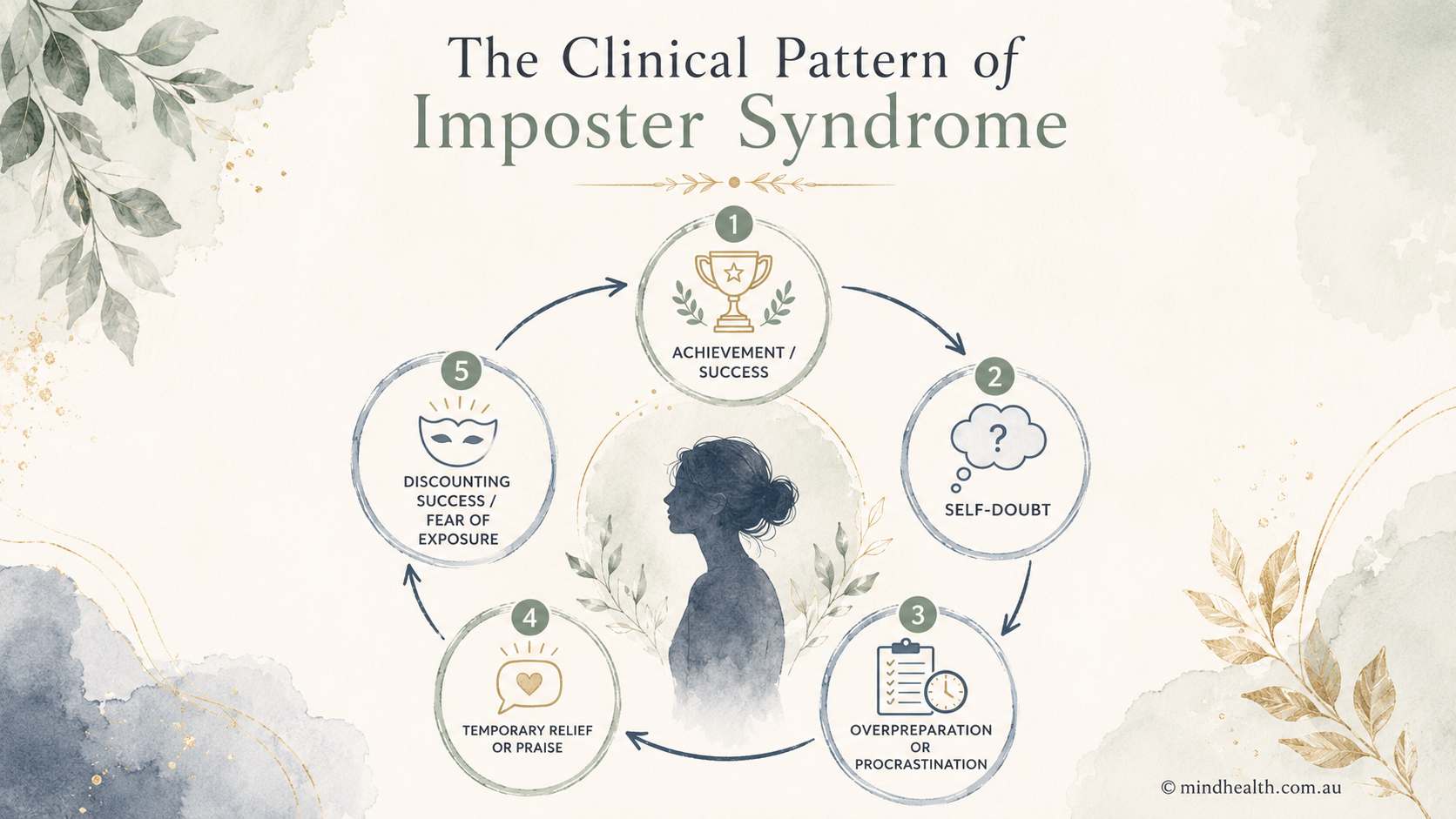
From a clinical perspective, imposter syndrome is driven by a constellation of cognitive distortions. Two are particularly central. The first is discounting the positive: attributing success to external factors — luck, timing, charm, or the lowered expectations of others — rather than to one’s own skill and effort. The second is emotional reasoning: the deeply flawed but seductive logic that because you feel unqualified, you must be unqualified. It is the psychological equivalent of looking at a flawless resume through a funhouse mirror.
Clance later identified six core characteristics that define the experience. These include the imposter cycle (oscillating between over-preparation and procrastination), perfectionism, super-heroism (the compulsive need to outwork everyone else), atychiphobia (fear of failure), denial of competence, and achievemephobia — a fear of success, driven by the anxiety that succeeding will only raise the bar and increase the risk of eventual exposure [3].
The 5 Faces of the Imposter
Dr. Valerie Young, an internationally recognised expert on the subject, categorises imposter syndrome into five distinct subtypes, each with its own unique flavour of self-sabotage [4]:

| Type | Core Belief | Typical Behaviour |
|---|---|---|
| The Perfectionist | “If it’s not perfect, it’s a failure.” | Focuses on the 1% that went wrong, not the 99% that went right. Delays submitting work until it is “perfect” — which, of course, it never is. |
| The Superwoman/Superman | “I must work harder than everyone else to prove I belong.” | Overloads their schedule, rarely delegates, and is chronically at risk of burnout. |
| The Natural Genius | “If I have to work hard at it, I must not be talented.” | Avoids challenges where they might not excel immediately. Feels shame when mastery requires effort. |
| The Soloist | “Asking for help proves I’m incompetent.” | Refuses assistance even when it would be entirely appropriate. Struggles in silence rather than risk being seen as needy. |
| The Expert | “I need to know everything before I’m qualified.” | Perpetually seeks more training, certifications, or degrees before feeling ready to act. The goalposts always move. |
The Nervous System Connection: Why Your Body Is Also Involved
Living with the constant, low-grade fear of being “found out” is not merely an intellectual inconvenience — it is a physiological burden. The persistent anticipation of exposure activates the sympathetic nervous system, triggering your fight, flight, or freeze response. When you are chronically scanning your environment for the threat of humiliation or failure, your cortisol and adrenaline levels remain elevated, even in objectively safe situations like a routine team meeting or a performance review.
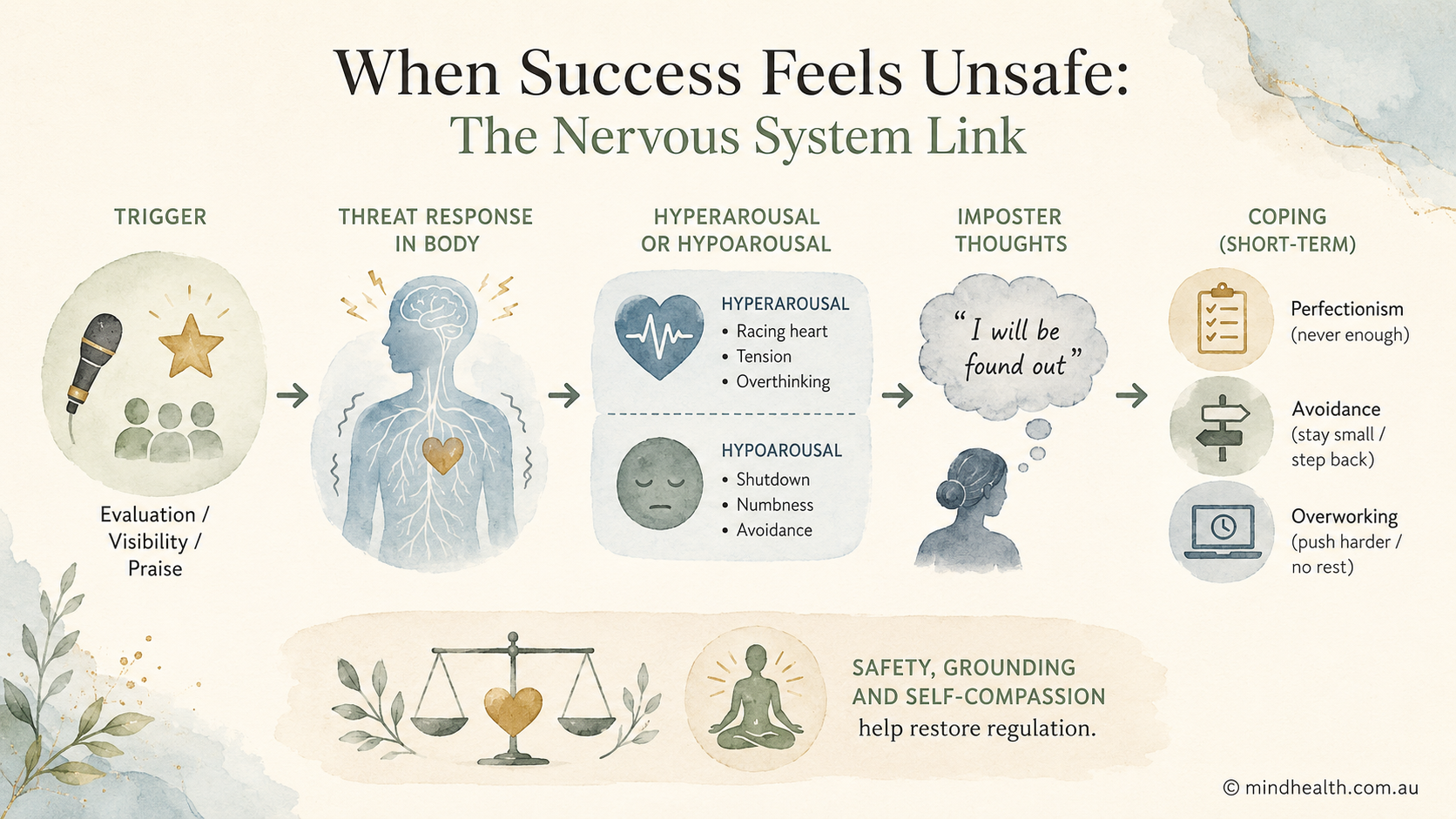
Over time, this chronic stress narrows your window of tolerance — the zone in which you can think clearly, regulate your emotions, and engage with the world effectively. You become more reactive to criticism, less able to absorb positive feedback, and increasingly prone to the kind of catastrophic thinking that imposter syndrome feeds on. You are not just thinking like an imposter; your nervous system has been recruited into the conspiracy.
This is why purely intellectual interventions — telling yourself “I am good enough” in the mirror — often fall flat. The body needs to be part of the solution.
Who Is Most Affected? The Research Tells a Surprising Story
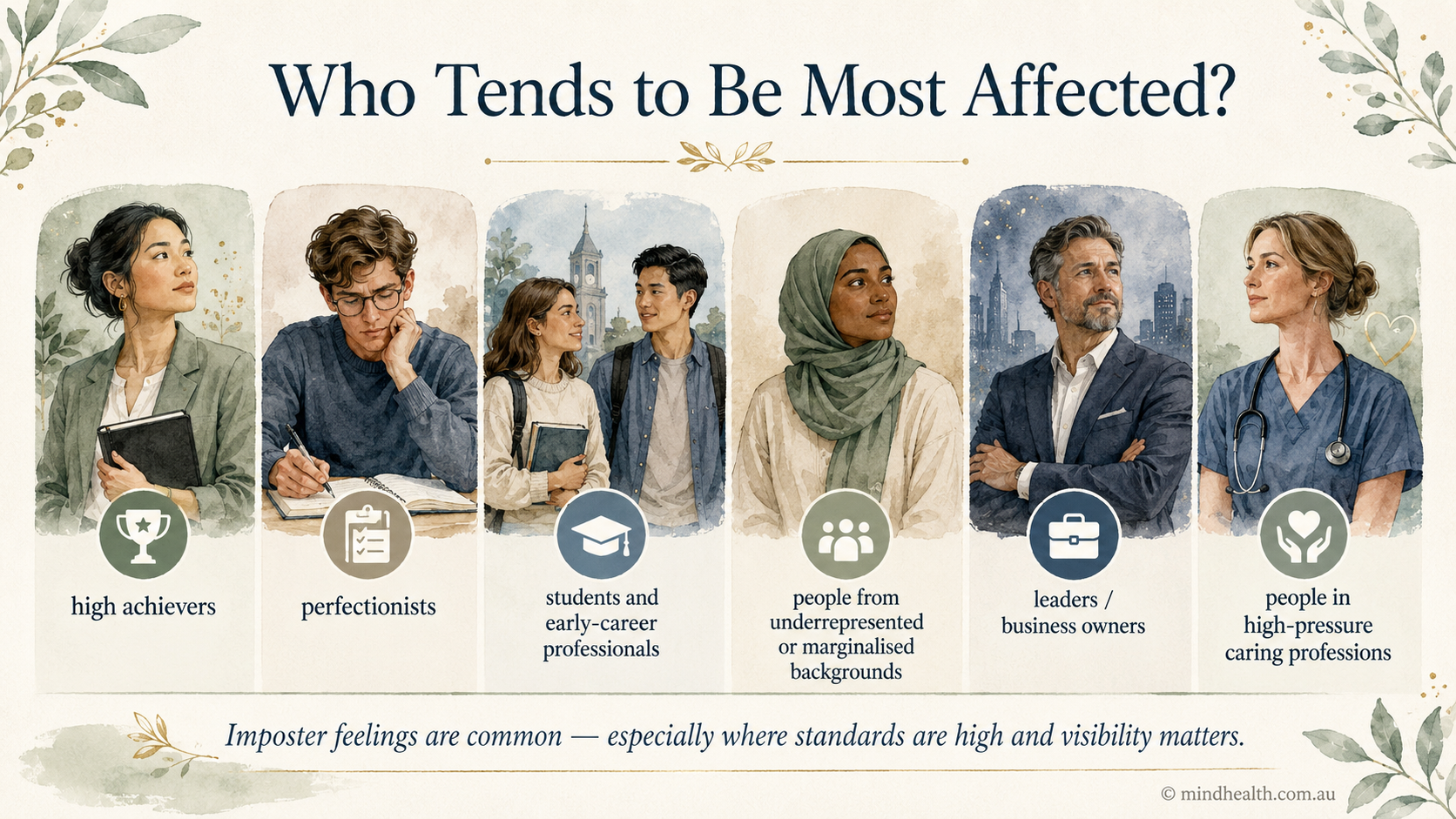
When Clance and Imes first described the phenomenon, their sample was exclusively high-achieving women. Subsequent research has significantly broadened our understanding. While imposter syndrome does appear to be more prevalent in women and in individuals from marginalised groups navigating spaces where they are underrepresented, it is far from a gendered experience [3]. Studies have found high rates among medical students, academics, executives, and first-generation professionals across all demographics.
One particularly striking study of medical students found that more than one-quarter of male students and over half of female students reported experiencing imposter syndrome — and that higher scores on the Clance Imposter Phenomenon Scale (CIPS) were significantly associated with burnout as measured by the Maslach Burnout Inventory [3]. The implication is sobering: imposter syndrome is not a harmless quirk of the overachieving personality. Left unaddressed, it is a direct pathway to professional burnout, depression, and chronic anxiety.
→ Learn more: Silencing Your Inner Critic: 11 Psychological Tactics to Overcome Impostor Syndrome
Evidence-Based Strategies to Break the Cycle
Overcoming imposter syndrome is not about manufacturing unshakeable, bulletproof confidence. It is about changing your relationship with uncertainty and self-doubt — learning to hold those feelings without being governed by them. Here are the strategies that have the strongest evidence base:

1. Name It to Tame It
Simply knowing that what you are experiencing has a name — that it is a recognized psychological phenomenon affecting the majority of high achievers — is itself therapeutic. Psychoeducation is consistently identified in the research as one of the most effective first steps in addressing imposter syndrome [5]. When you can label the experience as “imposter thinking” rather than “the truth about me,” you create psychological distance from it.
2. Separate Feelings from Facts
Just because you feel like an imposter does not mean you are one. When the inner critic gets loud, practice cognitive restructuring — a core technique of Cognitive Behavioural Therapy (CBT). Ask yourself: “What is the objective evidence that supports my competence in this situation?” Write down your qualifications, past successes, and positive feedback you have received. Force your brain to examine the data, not just the emotion. A useful exercise is to keep a “wins journal” — a running record of achievements, positive feedback, and problems you have solved — to consult when the imposter voice gets particularly loud.
3. Reframe Your Relationship with Failure and Effort
Imposter syndrome thrives on the belief that competence means effortless mastery — that truly talented people never struggle, never ask for help, and never need to try hard. This is, of course, a fiction. Research on expertise consistently shows that mastery requires sustained, effortful practice. Shift your internal narrative from a fixed mindset (“I am either smart or I’m not”) to a growth mindset (“I can learn and improve through effort and feedback”). Failure is not an indictment of your character; it is data for your next attempt.
4. Regulate Your Nervous System First
Because imposter syndrome recruits your stress response, cognitive strategies alone are often insufficient. You must also signal safety to your body before the thinking brain can engage effectively. Techniques that activate the parasympathetic nervous system — stimulating the vagus nerve through slow diaphragmatic breathing, cold water on the face, or gentle movement — can help move your nervous system out of “threat” mode and into a state of calm and clarity. From this regulated state, the cognitive work becomes far more accessible.
5. Break the Silence — Especially in Groups
Shame requires secrecy to survive. When you keep your imposter feelings hidden, they grow stronger and more convincing. Research consistently shows that group-based interventions — peer discussion groups, mentoring circles, and group therapy — are among the most effective approaches for imposter syndrome, precisely because they break the isolation [5]. Sharing your feelings with a trusted colleague, mentor, or psychologist almost invariably reveals a surprising truth: almost everyone in the room feels the same way. Normalising the experience strips it of its power.
6. Cultivate Self-Compassion — The Antidote to the Inner Critic
A 2023 study published in the Journal of Counseling Psychology found that a brief self-compassion intervention significantly reduced imposter phenomenon scores in college students [6]. Compassion-Focused Therapy (CFT) approaches imposter syndrome by targeting the harsh, punitive inner critic directly — not by silencing it, but by developing a warmer, more understanding relationship with oneself. The goal is not self-congratulation; it is the same kindness you would readily offer a struggling friend. As Dr. Kristin Neff, a leading researcher in the field, notes: self-compassion is not a luxury for the emotionally soft — it is a clinical tool for the psychologically resilient.
→ see also Impostor Syndrome: A 5-Step Guide to Silence Your Inner Critic and Overcome Self-Doubt
When to Seek Professional Support
If imposter syndrome is significantly affecting your career decisions, your relationships, your sleep, or your sense of self-worth, it is worth speaking with a psychologist. CBT and CFT have both demonstrated efficacy in addressing the cognitive and emotional patterns that sustain the imposter experience [5]. You do not need to white-knuckle your way through a phenomenon that responds well to evidence-based treatment.
You didn’t get here by accident. You earned your place at the table. It is time to pull up a chair — and own it.
Frequently Asked Questions
Is imposter syndrome a mental illness?
No. Imposter syndrome is not classified as a mental disorder in the DSM-5 or ICD-11. It is a psychological phenomenon — a pattern of cognitive distortions and emotional experiences. However, it frequently co-occurs with clinical anxiety, depression, and burnout, and when it does, professional support is warranted.
Who is most likely to experience imposter syndrome?
While anyone can experience it, research shows it is particularly prevalent among high achievers, perfectionists, graduate students, and individuals in highly competitive fields such as medicine, law, and academia. It is also frequently reported by individuals from marginalised groups navigating spaces where they are underrepresented — where the additional burden of stereotype threat amplifies the fear of being “found out.”
Does imposter syndrome ever go away completely?
For most people, the goal is not elimination but management. With the right tools — cognitive restructuring, nervous system regulation, self-compassion practices, and sometimes therapy — the imposter voice becomes quieter and less credible over time. Many highly accomplished people report that it never disappears entirely, but that they learn to hear it without being directed by it. Maya Angelou, Neil Gaiman, and Sheryl Sandberg have all spoken publicly about experiencing imposter syndrome throughout their careers.
Can therapy help with imposter syndrome?
Absolutely. Cognitive Behavioural Therapy (CBT) is highly effective in helping individuals identify and challenge the cognitive distortions that fuel imposter syndrome. Compassion-Focused Therapy (CFT) builds the self-compassion necessary to counteract the harsh inner critic. Group therapy and peer support groups have also shown strong results, particularly in reducing the sense of isolation that sustains the experience.
Is imposter syndrome more common in women?
The original 1978 research by Clance and Imes focused exclusively on women, which led to an early assumption that it was a predominantly female experience. Subsequent research has found that while women may report it at higher rates — particularly in male-dominated fields — imposter syndrome affects people of all genders. The experience is shaped not just by gender, but by the degree to which an individual feels like an “outsider” in a given context.
What is the difference between imposter syndrome and low self-esteem?
Low self-esteem is a pervasive, global sense of inadequacy that tends to be consistent across contexts. Imposter syndrome, by contrast, is often domain-specific and paradoxically linked to achievement. A person with imposter syndrome may feel entirely confident in their personal relationships but convinced they are a fraud at work. The two can co-occur, but they are clinically distinct.
References
- Clance, P. R., & Imes, S. A. (1978). The imposter phenomenon in high achieving women: Dynamics and therapeutic intervention. Psychotherapy: Theory, Research & Practice, 15(3), 241–247. https://paulineroseclance.com/pdf/ip_high_achieving_women.pdf
- Kruger, J., & Dunning, D. (1999). Unskilled and unaware of it: How difficulties in recognizing one’s own incompetence lead to inflated self-assessments. Journal of Personality and Social Psychology, 77(6), 1121–1134. https://doi.org/10.1037/0022-3514.77.6.1121
- Huecker, M. R., Shreffler, J., McKeny, P. T., & Davis, D. (2023). Imposter Phenomenon. In StatPearls. StatPearls Publishing. https://www.ncbi.nlm.nih.gov/books/NBK585058/
- Young, V. (2011). The Secret Thoughts of Successful Women: Why Capable People Suffer from the Impostor Syndrome and How to Thrive in Spite of It. Crown Business.
- Para, E., Dubreuil, P., Miquelon, P., & Martin-Krumm, C. (2024). Interventions addressing the impostor phenomenon: a scoping review. Frontiers in Psychology, 15, 1360540. https://doi.org/10.3389/fpsyg.2024.1360540
- Liu, S., Wei, M., & Russell, D. (2023). Effects of a brief self-compassion intervention for college students with impostor phenomenon. Journal of Counseling Psychology, 70(1), 1–12. https://doi.org/10.1037/cou0000641
Related reading
- Self-esteem support at Mind Health
- Building confidence with a psychologist
- Perfectionism: when high standards become self-destructive
Get Professional Support
Stress Management at Mind Health
Our psychologists use evidence-based techniques including CBT and mindfulness to help you manage stress effectively.
Medicare rebates available with a Mental Health Care Plan · Telehealth appointments Australia-wide
Helpful Australian Resources
- Beyond Blue — Support for depression, anxiety and related conditions. Call 1300 22 4636.
- Lifeline Australia — Crisis support and suicide prevention. Call 13 11 14 (24/7).
- Head to Health — Australian Government mental health gateway and digital resources.
- Black Dog Institute — Research-based resources on depression, bipolar disorder, and PTSD.
- SANE Australia — Support for people living with complex mental illness. Call 1800 187 263.