

In my practice over the past 20 years, I’ve noticed something that nearly every new client mentions within the first few sessions: “This is how my family has always done things.” Whether it’s conflict avoidance, perfectionism, emotional enmeshment, or taking on others’ problems as your own, the roots often run deep into family soil.
Family dynamics shape us in ways we don’t always recognise until we’re sitting in my office wondering why certain patterns keep repeating. That’s not about blaming our families. Most parents do the best they can with the tools they have. But understanding these patterns is often the first step toward breaking cycles that may be affecting your mental health.
How Family-of-Origin Patterns Shape Us
Your family of origin, the family you grew up in, acts like a template for how you relate to the world. The way your parents handled conflict, managed emotions, expressed love, or dealt with stress becomes your normal. You internalise these patterns so thoroughly that, as an adult, you might not even realise you’re replicating them.

I worked with a client, let’s call her Sarah, who came to me anxious and exhausted. During our first session, she described her teenage daughter’s friendship drama. Sarah had spent the weekend managing her daughter’s emotions, smoothing things over with the friend’s parents, and essentially solving a problem that belonged to her child. When I asked why, she said, “Because my mum always fixed things for me.” Sarah had learned that love meant managing other people’s emotions. She couldn’t tolerate seeing people she cared about struggle, even though that struggle was necessary for growth.
This is how patterns transmit across generations. Not because families are dysfunctional, but because we absorb our parents’ coping strategies as gospel truth.
Common Family Dynamics That Impact Mental Health
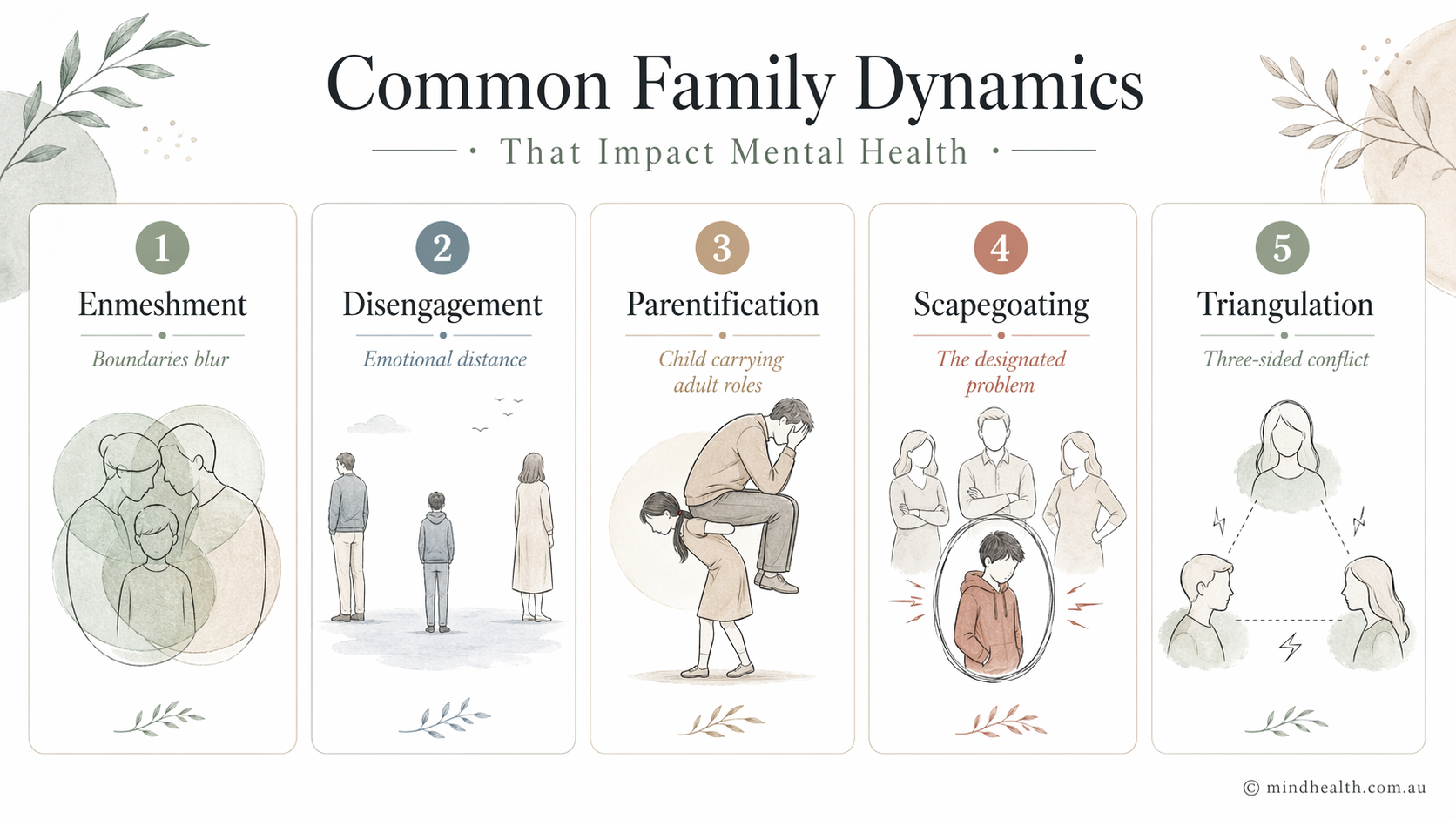
Enmeshment: Where boundaries Blur
Enmeshment occurs when family members’ emotional or physical boundaries are unclear. You might not know where “you” end and “they” begin. Parents might confide adult problems to children, children might manage parents’ emotions, or siblings might feel responsible for each other’s wellbeing.
The cost of enmeshment is significant: anxiety when separated from family, difficulty making independent decisions, guilt about prioritising your own needs, and a foggy sense of identity. I’ve worked with clients deep in enmeshment who couldn’t make major decisions about work, relationships, or education without family approval.
Disengagement: The Other Extreme
On the flip side, some families maintain such rigid emotional distance that children learn that feelings are unwelcome. “Don’t cry.” “We don’t talk about that.” “You’re being too sensitive.” These messages teach people to disconnect from their own needs and emotions. Disengaged families often produce adults with depression or anxiety who don’t recognise their own distress until it’s severe.
Parentification: Childhood Robbed
Parentification happens when a child takes on the emotional or practical care of a parent. They become the counsellor, the mediator, the stable one. I’ve worked with adults who spent their childhood managing their parent’s mental health, and now they struggle to ask for support because they’ve never learned how to be vulnerable. They feel responsible for others’ emotional stability and experience profound guilt about “not being there enough.”
Scapegoating: The Designated Problem
In some families, one child becomes the “problem child” or “the sensitive one.” The family unconsciously projects its own dysfunction onto that person. The scapegoat often internalises this identity: “I’m the broken one.” This can lead to self-sabotage, depression, or a rigid identity built on family narrative rather than reality.
Triangulation: Three-Sided Conflict
Triangulation happens when conflict between two people gets “resolved” by involving a third party. A child might become the go-between for divorced parents, or a sibling becomes the referee in their parents’ marriage. The child learns that direct conflict is unsafe and that they’re responsible for keeping the peace, a burden that often follows them into adult relationships.
Why These Patterns Persist
You might ask: if these patterns are painful, why do we keep repeating them? The answer is that they’re familiar. Familiar feels safe, even when it’s harmful. Your nervous system recognises the pattern, and that predictability provides a strange sense of comfort. We unconsciously seek partners, jobs, and situations that recreate our family template because we know how to navigate them.
I often see this in clients’ romantic relationships. A person with an enmeshed family might choose a partner who is emotionally dependent. A scapegoat might repeatedly end up in relationships where they’re blamed or undervalued. Not because they like being hurt, but because these dynamics are what they learned to expect and manage.
Breaking the Cycle: What Therapy Can Do
The good news is that family patterns are not destiny. Once you recognise them, you can interrupt them. This is where individual therapy, family therapy, or couples therapy can be transformative.
In my practice, breaking family patterns typically involves three steps:
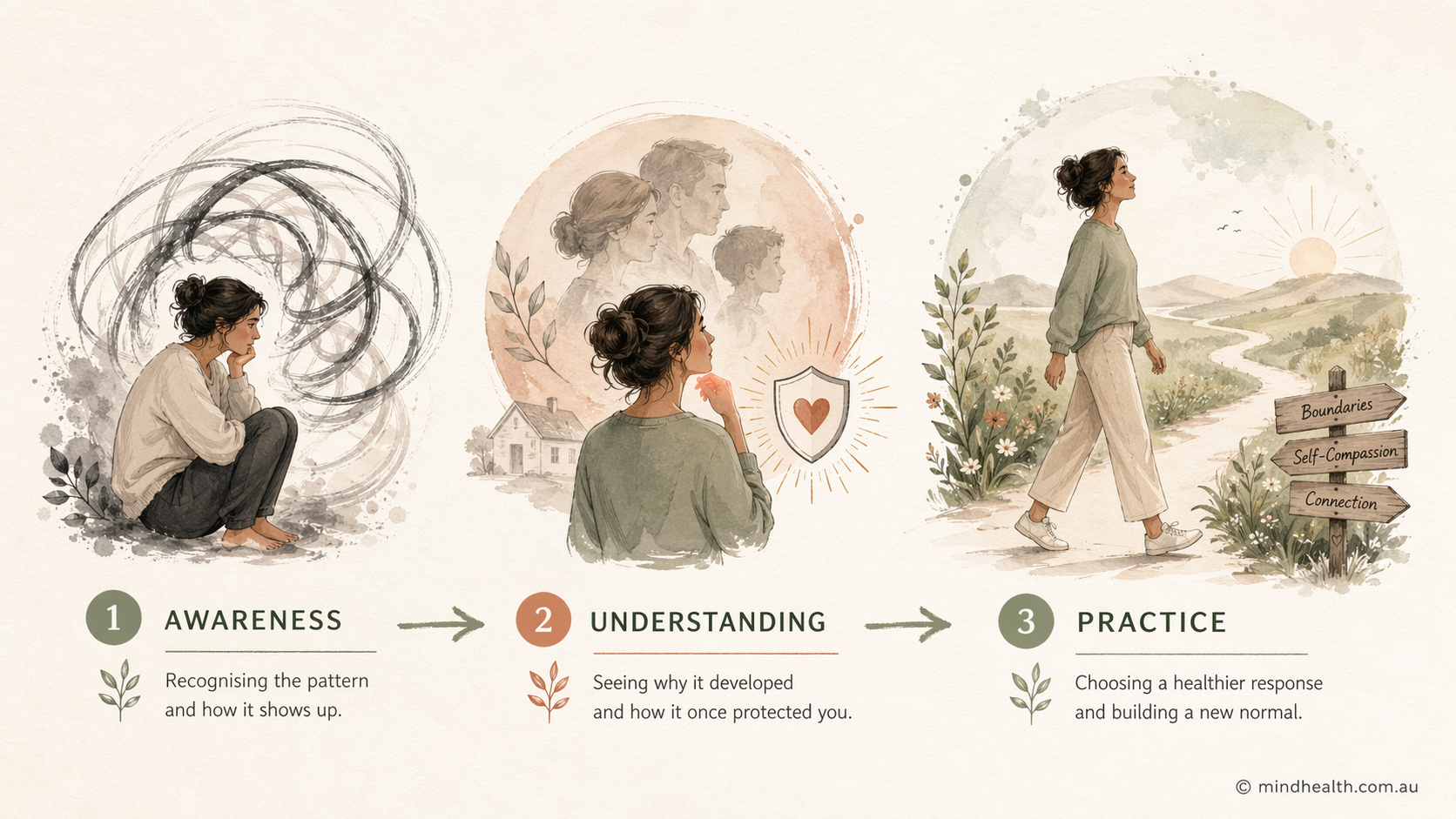
First, awareness: Naming the pattern. “I see now that I take on my partner’s emotions the way I did with my mother.” This sounds simple, but it’s profound. You can’t change what you don’t see.
Second, understanding: Exploring why the pattern developed. It made sense once. In your family, being emotionally available might have been how you got love, or being invisible might have meant safety. Understanding the protective function of the pattern reduces shame.
Third, practice: Consciously choosing a different response. This is where it gets uncomfortable, because the new behaviour feels unnatural. Setting boundaries with family feels selfish. Asking for help feels burdensome. Not fixing your partner’s problem feels uncaring. But you practice anyway, and gradually the new response becomes your new normal.
Practical Boundaries: The Essential Skill
Boundaries are where family pattern work gets concrete. A boundary isn’t a wall. It’s a clear statement of what you will and won’t do. If you grew up in an enmeshed family where boundaries were seen as rejecting, this can feel terrifying. But boundaries actually deepen relationships by creating space for authentic connection.
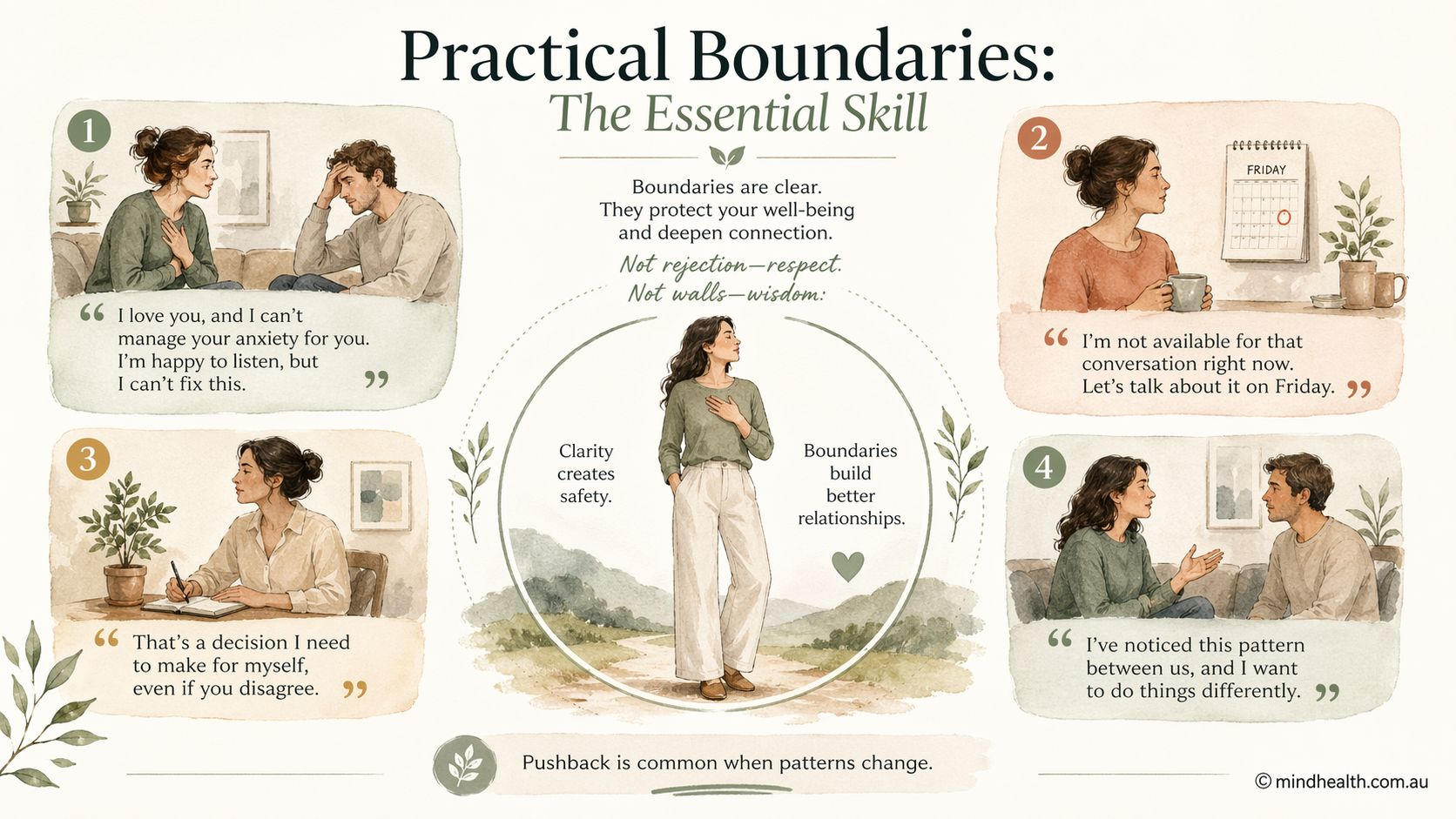
Some boundary-setting looks like:
- “I love you, and I can’t manage your anxiety for you. I’m happy to listen, but I can’t fix this.”
- “I’m not available for that conversation right now. Let’s talk about it on Friday.”
- “That’s a decision I need to make for myself, even if you disagree.”
- “I’ve noticed this pattern between us, and I want to do things differently.”
When you start setting boundaries, family members might react negatively. They might accuse you of being selfish, cold, or ungrateful. This is often a sign the boundary is working because you’re disrupting an old system. Stay the course.
Family Therapy vs. Individual Work
Sometimes, family patterns are best addressed in individual therapy first, where you can safely explore your experience and build new skills. Other times, family therapy is the fastest path to change, especially when the pattern is still being reinforced in the relationship itself. This depends on your family’s capacity for reflection and whether they’re willing to participate.

I typically recommend individual therapy first if you’re coming in feeling stuck, anxious, or carrying shame about your role in family dynamics. Once you’ve developed awareness and new skills, family sessions can be powerful for creating lasting change in those relationships.
When to Seek Help
If you find yourself:
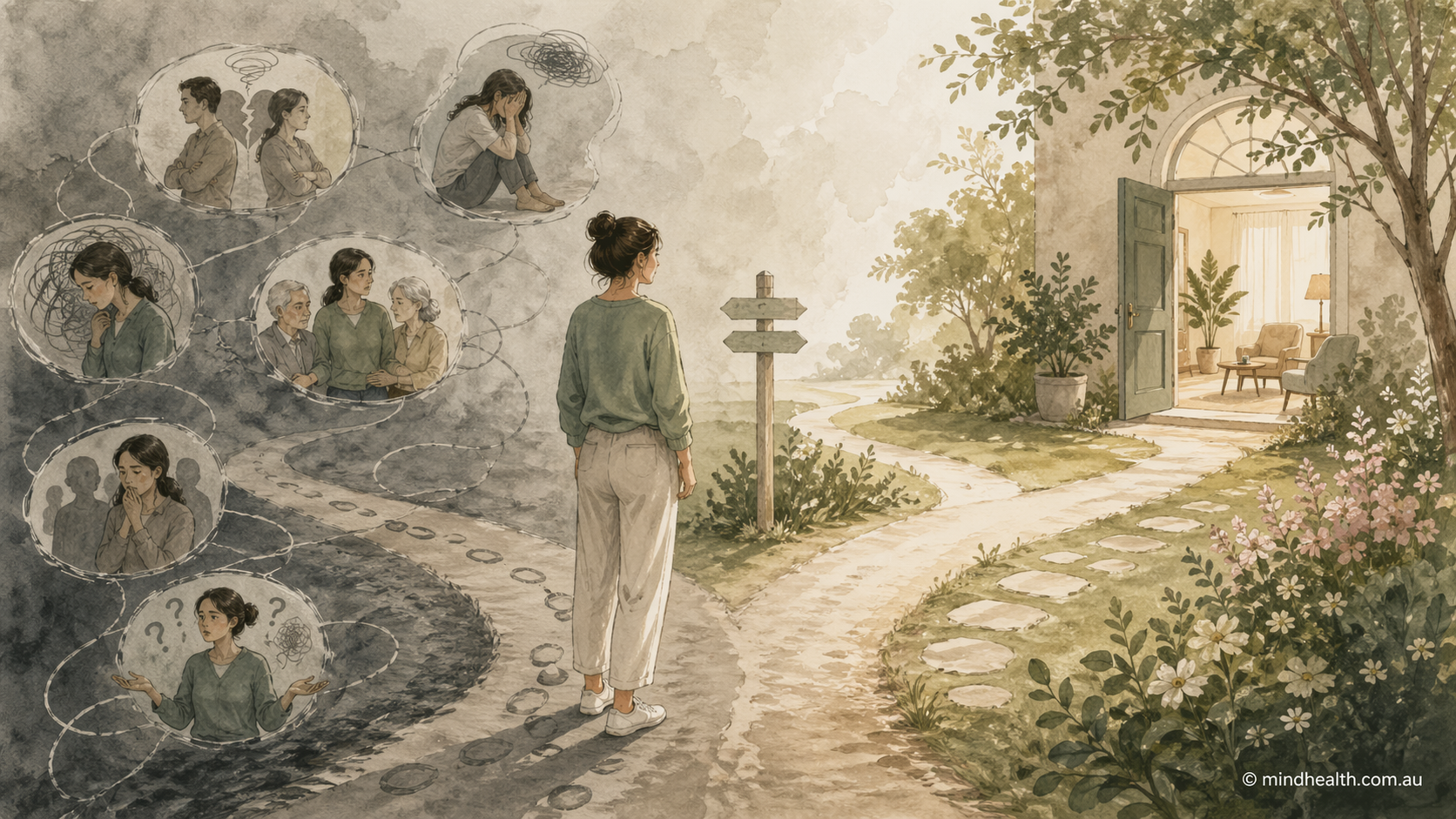
- Repeating the same relationship patterns
- Struggling with anxiety, depression, or guilt related to family situations
- Unable to make decisions without family input
- Taking responsibility for others’ emotions or wellbeing
- Feeling trapped between loyalty to family and your own needs
If that sounds familiar, family dynamics are likely playing a role in your mental health. Our free Mind Health Check can help you assess where you’re at, and booking a consultation is the first step toward breaking patterns that may have shaped you for decades.
One final thought: changing family patterns is not about blaming your parents or rejecting your family. It’s about saying, “I’m grateful for what I was given, and I choose to do some things differently.” That choice is profoundly powerful.
Further Resources
→ For more on family therapy approaches, the Australian Psychological Society has resources on evidence-based family work. The Beyond Blue website also offers information on relationship and family support.
Frequently Asked Questions
How do family dynamics affect mental health?
Family dynamics shape our attachment styles, emotional regulation, self-worth, and relationship patterns. Unhealthy dynamics like enmeshment, parentification, or emotional neglect can contribute to anxiety, depression, and relationship difficulties in adulthood.
Can you change family dynamics as an adult?
You can change your role within the family system. Setting boundaries, changing your responses, and breaking patterns are all within your control, even if you cannot change other family members.
What therapy is best for family issues?
Schema therapy is excellent for understanding deep patterns from family of origin. Family therapy, psychodynamic therapy, and systemic approaches also help. A psychologist can recommend the best fit.
Is it normal to feel guilty about setting boundaries with family?
Very normal. Family systems resist change, and guilt is often the mechanism that pulls you back into old patterns. Working with a psychologist helps you navigate this guilt while maintaining healthier boundaries.

Related reading
- Family therapy at Mind Health
- Codependency explained: signs, causes and therapy
- School refusal: a guide for parents
Get Professional Support
Talk to a Psychologist at Mind Health
If you're struggling with your mental health, our experienced psychologists are here to help.
Medicare rebates available with a Mental Health Care Plan · Telehealth appointments Australia-wide
Helpful Australian Resources
- Beyond Blue — Support for depression, anxiety and related conditions. Call 1300 22 4636.
- Lifeline Australia — Crisis support and suicide prevention. Call 13 11 14 (24/7).
- Head to Health — Australian Government mental health gateway and digital resources.
- Black Dog Institute — Research-based resources on depression, bipolar disorder, and PTSD.
- SANE Australia — Support for people living with complex mental illness. Call 1800 187 263.