 The referral pathways guide



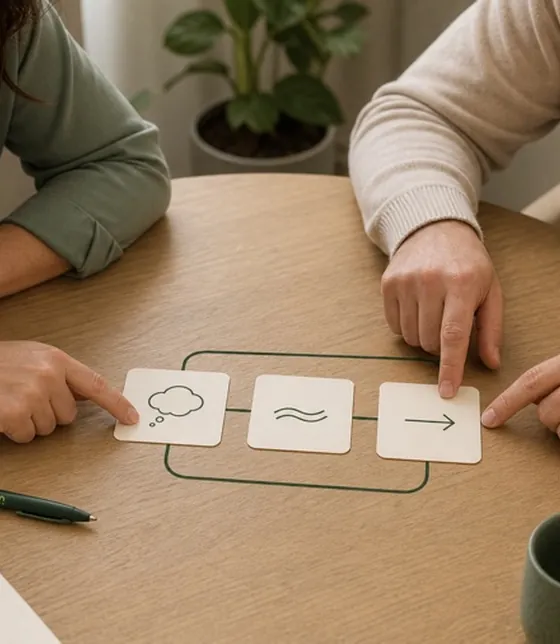 Read with intention













 Meet the clinicians
Living well with chronic pain.
Persistent pain wears on sleep, mood and everything you want to do. Psychology will not pretend it away; it helps you turn the volume down and take back your days, alongside your medical care.
Pain that has become part of the furniture.
Around one in five Australians lives with persistent pain. When it lingers past the point of healing, it starts to shape your whole life.
- The pain has stuck around well past the usual healing time.
- Flare-ups derail your plans and leave you second-guessing every activity.
- Sleep is broken, and the tiredness makes the pain feel worse.
- You avoid movement in case it hurts, and your world keeps shrinking.
- Your mood has dropped, or you feel more irritable and on edge.
- You have felt dismissed, or told it is "all in your head".
- Work, relationships and the things you enjoy have all taken a hit.
- You are exhausted by the daily work of managing it.
Your pain is real. When pain persists, the nervous system can become more sensitive and turn the volume up, and stress, sleep and mood all feed into how much you feel. That is why a whole-person approach works so well: biological, psychological and social together, hand in hand with your GP, physiotherapist and pain team.
Turning down the volume.
Pain psychology is practical. Your psychologist draws on evidence-based approaches for persistent pain, and explains the reasoning as you go.
CBT
Cognitive behaviour therapy eases the fear, frustration and catastrophic thoughts that quietly crank pain up.
ACT
Acceptance and commitment therapy helps you spend less energy fighting pain and more on the life and activities that matter.
Pain-management skills
Pacing, graded activity, flare planning and better sleep make up the practical toolkit.
Mindfulness & relaxation
Calming an over-sensitised nervous system.
The aim is a bigger life, not just a smaller pain score. That means more of what you value, on more days. We review your goals together and work in step with your medical team.
Your first weeks, step by step.
No lectures, no pressure. Here is how the early sessions usually unfold.
- 1
Mostly a conversation
Your psychologist asks about your pain, your history and what you would most like to get back to. Together you sketch a plan.
Session one - 2
Understanding your pain
You map your flares, your pacing, your sleep and the thoughts that turn pain up. Then you start practising specific skills between sessions.
Sessions two to four - 3
Reviewing together
Progress is measured in function and quality of life, checked against your goals.
Ongoing

Living well with a health condition.
Conditions such as diabetes, heart disease, cancer, and autoimmune or neurological conditions can affect mood, sleep, work and relationships. Psychology can help you cope with the changes and look after your wellbeing alongside your medical care.
- Adjusting to a diagnosis and the changes it brings
- Managing worry, low mood and fatigue
- Keeping up with treatment and lifestyle changes
- Talking with doctors, family and work about what you need
Know your costs before you start.
We confirm your fee and any rebate in writing before your first session. If a funding body covers you, we bill them directly wherever possible.
See fees- Medicare: rebates on up to 10 sessions a year with a Mental Health Treatment Plan from your GP.
- NDIS, DVA, Workers Comp & CTP: usually no out-of-pocket cost when approved.
- Private health: claim through your extras cover, with no referral needed.






More ways we can help.
Check in with yourself.
Free, private tools to try before or alongside sessions. They are not a diagnosis.
Free · 5 to 10 min
Take the Mind Health Check
Short questionnaires, scored privately in your browser. We have ticked the ones most related to this page, and you can change them.
Fact sheet: Chronic pain
A plain-language guide with practical steps. Free to download.
Try this week
- Pace your day: break tasks into smaller parts, with rests in between.
- Notice what helps on better days, and write it down.
- Practise slow breathing or relaxation when pain flares.
Need help now? Our urgent help page has who to call, day and night.
Things people ask before booking.
Do I need a referral to start?
Does seeing a psychologist mean my pain is not real?
Will therapy get rid of my pain?
Is what I share confidential?
Can this work over telehealth?
Can I get Medicare rebates for pain psychology?
How many sessions will I need?
Will you work with my doctor or physio?

Pain does not have to run your days.
Tell us what is going on and we will match you with a psychologist who works with chronic pain, usually after a free triage. We will work in step with your GP and physio, with your consent.
Talk to us
How can we help?
Fees & rebatesFind a psychologistMind Health CheckReferring a clientWorkplaces & EAP
If you need support right now Lifeline 13 11 14 · Suicide Call Back 1300 659 467 · 13YARN 13 92 76 · Emergency 000. Available 24/7 — this panel isn't.
We'll call you back on the number you gave us within one business day. If it's urgent, call 1300 084 200.

Follow the circle. Breathe in as it grows, out as it settles. Nothing else to do.
That calm you just found is always within reach. When you'd like someone alongside you, we're here.