 The referral pathways guide



 Read with intention












 Meet the clinicians
How to manage anger: A psychologist’s guide to what works

Most people who talk to a psychologist about anger don’t describe themselves as angry people. They describe a moment. The laptop slammed shut in a meeting. The words said to a partner that can’t be unsaid. The white-knuckle fury on the M4 that was still there at bedtime. And then the question that brings them in: why did I react like that?
It’s a better question than it sounds, because anger is one of the most misunderstood emotions we work with. It gets treated as a character flaw or an explosion to be feared, when it’s usually a normal, informative response that has become miscalibrated. This guide covers what anger is for, what it does to your body, how it differs from aggression, and what the research says actually helps.
Key takeaways
- Anger is a normal, informative response to a blocked goal, crossed boundary or unfairness, and becomes a problem when it fires too often, too intensely or for too long.
- Anger activates the body’s threat system and dials down the prefrontal cortex, which is why arguments at peak anger tend to go badly.
- Anger is an emotion and aggression is a behaviour, and research suggests venting rehearses anger instead of releasing it.
- Skills that can help include noticing early warning signs, taking a structured time-out, slowing your breathing, testing angry thoughts and saying things assertively.
- Consider talking to a psychologist if your anger feels out of proportion, takes hours to subside, or is causing problems at work or in relationships.
What anger is actually for
Anger is your mind’s response to a specific kind of appraisal: something is wrong, and it shouldn’t be. A goal has been blocked, a boundary crossed, a rule of fairness violated, or someone you care about threatened. Where anxiety says “danger ahead, retreat”, anger says “obstacle ahead, push”.
That signal has real value. Anger tells you a boundary needs defending. It supplies the energy to have a difficult conversation, to challenge unfair treatment at work, to protect your children. People who feel no anger at all often struggle to assert themselves, and quietly accumulate resentment instead.
So the clinical question is never “how do we get rid of anger?” Anger becomes a problem when it fires too often, too intensely, for too long, or drives behaviour that damages the very things you’re trying to protect.
What happens in your body when you’re angry
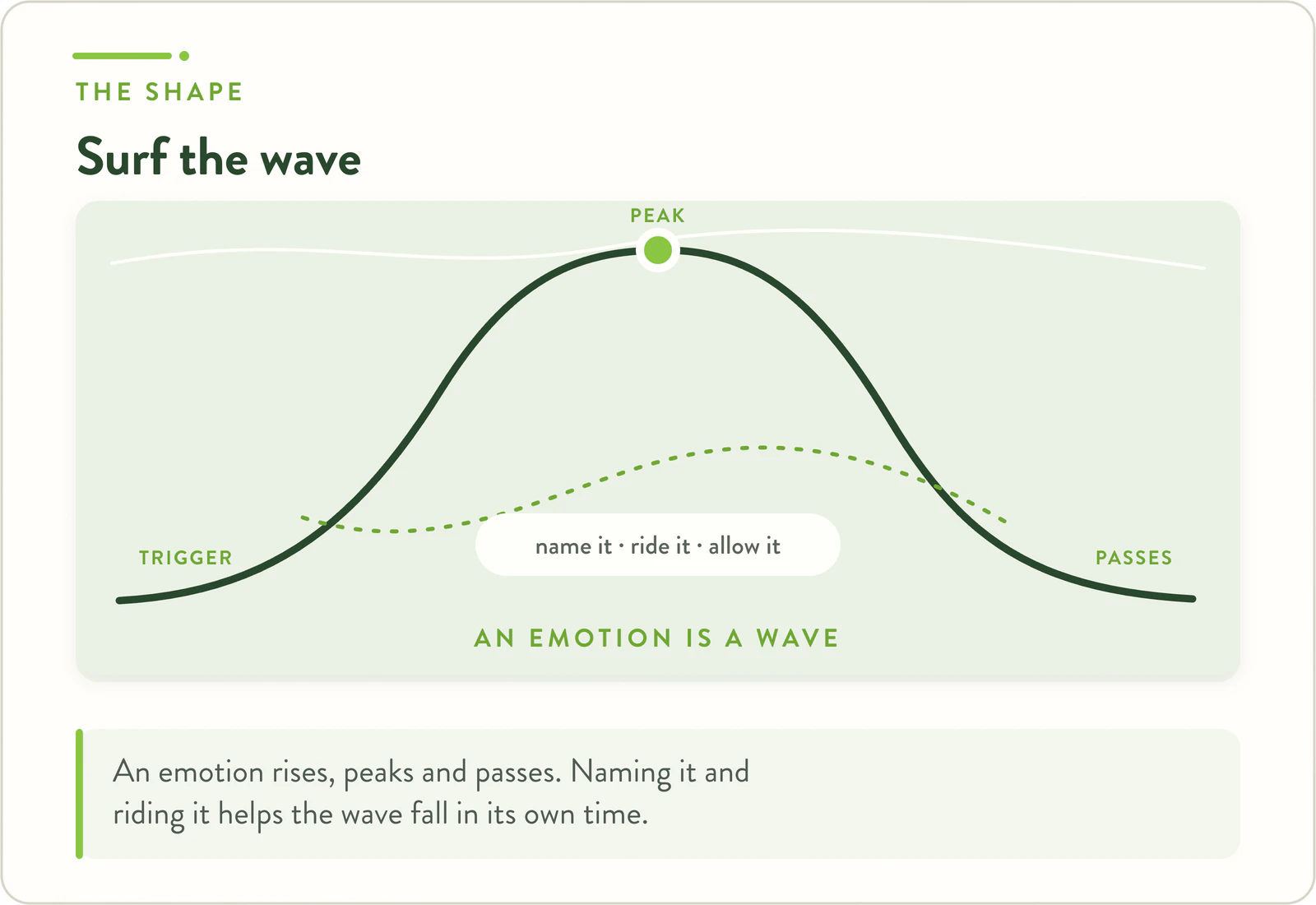
Anger is as much a physical event as a mental one. Your brain’s threat system is centred on the amygdala. When it registers a violation, it activates the sympathetic nervous system within moments. Adrenaline and noradrenaline surge, heart rate and blood pressure climb, breathing quickens, and muscles in the jaw, shoulders and hands tense.34 Your body is preparing you for confrontation.
At the same time, activity is effectively dialled down in the prefrontal cortex, the region that handles perspective-taking, consequence-weighing and impulse control. Attention narrows onto the provocation. This is why the argument you have at peak anger goes so badly: you are debating with reduced access to the very faculties debating requires.
Two practical points follow. First, this arousal doesn’t vanish the instant the trigger passes; stress hormones take time to clear, which is why a morning conflict can leave you snappy all afternoon. Second, because the response is physiological, it can be regulated physiologically. That means you can work on the body directly rather than trying to think your way out of a state designed to resist thinking.
Anger is not aggression
This distinction changes how people relate to their anger, so it’s worth being precise. Anger is an emotion: a felt state you don’t fully choose. Aggression is a behaviour, whether that’s shouting, intimidating, breaking things or hitting, and behaviour involves choice, even when the window for choosing feels narrow. You can be furious and act well; you can also be aggressive without much anger at all.
People typically fall into one of three unhelpful patterns: expressing anger aggressively, suppressing it entirely (which tends to leak out as sarcasm, withdrawal or resentment), or swinging between the two, where things get bottled up until they erupt. The healthy alternative is assertion: naming the problem clearly and directly without attacking the person.3
One popular idea deserves retiring here: that anger must be “vented” or it builds up like steam. Research has directly tested this. In a well-known study, psychologist Brad Bushman found that people who vented by hitting a punching bag while thinking about the person who provoked them ended up more angry and more aggressive afterwards, not less.2 Venting rehearses anger; it doesn’t release it.3
Evidence-based ways to manage anger
The best-studied psychological approach to anger is cognitive behaviour therapy (CBT), often combined with relaxation training and skills practice. A frequently cited meta-analysis by Beck and Fernandez, pooling 50 studies, found that people receiving CBT for anger fared better on average than a large majority of untreated participants.1 The strategies below draw on that tradition. They are skills, which means they work like any skill: unreliably at first, better with practice, and best when practised before you need them.
Learn your early warning signs
By the time you’re shouting, the useful window has closed. The skill is noticing anger at three or four out of ten rather than nine. For a week, track your anger episodes: what happened, what you felt in your body first (heat in the face, clenched jaw, an urge to interrupt), and what you did. Most people discover their anger has a reliable signature and predictable triggers. Predictable is workable.
Use a structured time-out
A time-out is not storming off, and done properly it’s the opposite of avoidance. It has four parts: name it (“I’m getting too angry to do this well. I need twenty minutes”), leave the situation, spend the time actually lowering your arousal rather than mentally re-running the argument, and come back when you said you would.4 That last part is critical: the return is what makes it a regulation strategy rather than a punishment, especially in relationships.
Slow the body down
Because anger is sympathetic arousal, anything that activates the body’s calming (parasympathetic) system helps. A few minutes of slow breathing with a long exhale (for instance, in for four counts, out for six) signals safety to the nervous system.4 Deliberately unclenching the jaw, dropping the shoulders and opening the hands works against the muscle pattern of anger. A brisk walk metabolises the adrenaline that’s already circulating. None of these solve the problem that made you angry; they restore access to the part of your brain that can.
Catch and test the thinking
Anger is fuelled less by events than by interpretations, and angry interpretations follow patterns: hostile attributions (“he did that deliberately”), rigid rules (“people should indicate before merging”), catastrophising (“this has ruined the whole day”) and mind-reading. CBT teaches you to treat these thoughts as hypotheses rather than facts.3 Useful test questions: What’s the evidence they meant harm? Is there a less personal explanation? How much will this matter in a month? The goal isn’t to talk yourself into accepting genuinely bad behaviour. It’s to make sure your reaction is answering to reality, not to the harshest available interpretation of it.
Reduce the fuel
Anger has a threshold, and that threshold drops when you’re depleted. Poor sleep, chronic stress and burnout, hunger, pain and alcohol all shorten the fuse. Alcohol deserves special mention, because it directly impairs the frontal-lobe braking system you rely on. If your anger has worsened lately, audit the load you’re carrying before concluding your personality has changed. Sometimes the most effective anger strategy is an earlier bedtime and a smaller workload.
Say it straight
Assertion converts anger’s energy into something useful. A workable formula: describe the specific behaviour (“when the report went out without my section”), name the impact (“I felt undermined, and it created rework”), and make a clear request (“next time, can you check with me first?”). Pick your moment, since raising it at three out of ten, hours later, beats raising it at nine, immediately. And stay on the issue rather than widening the war to the person’s character.
Anger, stress, depression and trauma
Persistent anger is often the visible edge of something else. Chronic stress keeps the nervous system partially mobilised, so ordinary frictions land on a body already primed to fight. Depression frequently shows up not as sadness but as irritability, a short fuse and withdrawal, particularly in men, which is one reason it goes unrecognised. And for people who have lived through trauma, the threat system can remain on a hair trigger long after the danger has passed, so anger arrives fast, hot and seemingly out of proportion because the body is responding to more than the present moment.
This matters practically: if anger is the symptom, techniques alone may not be enough. Effective help sometimes means assessing and addressing what sits underneath alongside the anger itself: the stress load, the mood, the unprocessed experience.
When to seek support
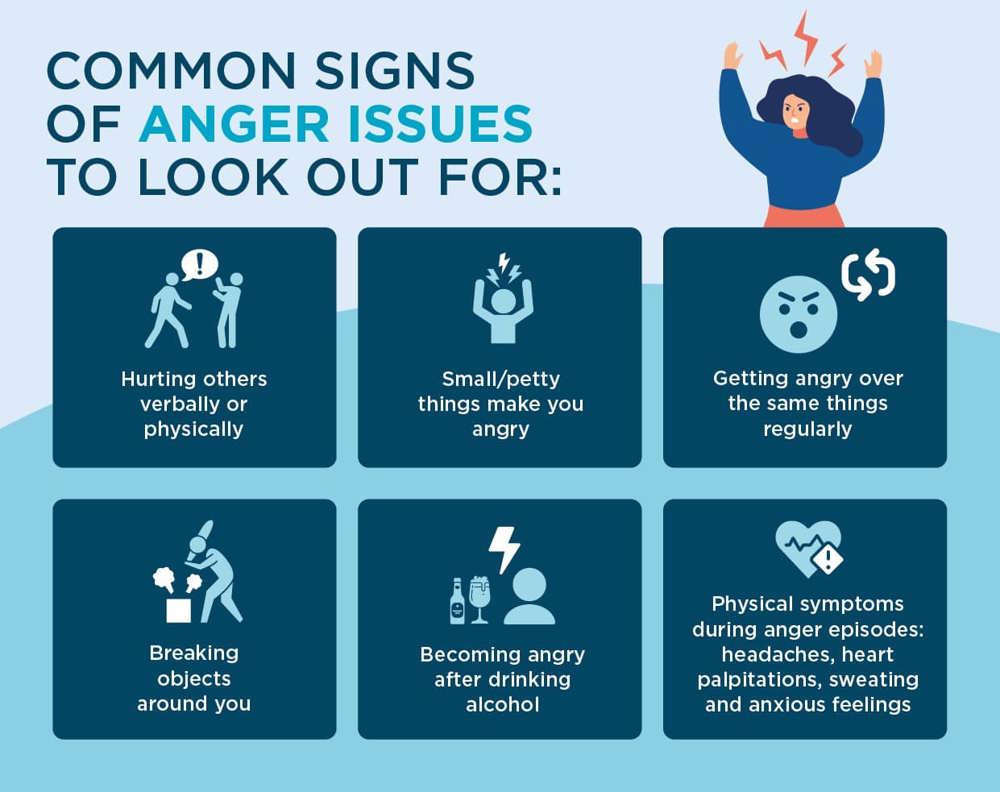
Consider talking to a psychologist if any of the following ring true:
- Your anger feels out of proportion to triggers, or takes hours to subside
- People you love are wary around you, or you’re repairing the same damage repeatedly
- Anger is causing problems at work, or has cost you relationships or opportunities
- You’ve broken things, driven dangerously, or felt close to physical aggression
- You mostly suppress anger, and it’s surfacing as resentment, tension or low mood
- Your anger sits alongside heavy stress, flat mood, heavy drinking or past trauma
Seeking help for anger is common and practical, because the work is a set of learnable skills plus, where needed, attention to what’s driving the anger. A psychologist can assess what’s going on and tailor an approach.
If anger is putting anyone’s safety at risk, act now rather than later: call 000 in an emergency, Lifeline on 13 11 14, or the Men’s Referral Service on 1300 766 491 if you’re worried about your behaviour towards family.
Frequently asked questions
Is anger ever healthy?
Yes. Anger is a normal emotion with a protective function: it flags unfairness and boundary violations and provides energy to address them. The clinical concern is not whether you feel anger but its frequency, intensity, duration and consequences, along with whether you can express it without harming yourself or others.
Doesn’t venting anger get it out of your system?
The research suggests the opposite. Venting, whether punching pillows, ranting or replaying the grievance, tends to rehearse and intensify anger rather than discharge it. Lowering physical arousal and re-examining the angry thinking are consistently more useful than acting the anger out.
How long does anger management take?
It varies with the person and what’s driving the anger. Skills-focused work is often structured over a number of weekly sessions, while anger connected to trauma, depression or long-standing patterns can take longer. A psychologist can give you a clearer picture after an initial assessment.
Can anger management be done by telehealth?
Yes. The core components of assessment, CBT strategies and skills practice between sessions translate well to videoconference, and telehealth removes travel as a barrier. Some people prefer starting these conversations from home.
If anger has started costing you more than it protects, it’s a workable problem. You also don’t have to work it out alone. Mind Health has provided psychology services from Parramatta since 2004, with Ahpra-registered psychologists offering in-person appointments and telehealth Australia-wide, including a structured anger management program for people who want a focused, skills-based approach. You can request an appointment online or call the practice to discuss what would suit you.
References
- Beck, R., & Fernandez, E. (1998). Cognitive-behavioral therapy in the treatment of anger: A meta-analysis. Cognitive Therapy and Research, 22(1), 63–74.
- Bushman, B. J. (2002). Does venting anger feed or extinguish the flame? Catharsis, rumination, distraction, anger, and aggressive responding. Personality and Social Psychology Bulletin, 28(6), 724–731.
- American Psychological Association. Control anger before it controls you.
- Healthdirect Australia. Anger management.
More on wellbeing & self.
 Wellbeing & Self
AI companions: When a chatbot becomes your 2am confidant
Why people confide in AI chatbots at 2am, what the research and Australia's new rules say, and how…
 Bülent Ada12 min
 Wellbeing & Self
Together we thrive: Connection and Mental Health Month 2026
The 2026 Mental Health Month theme is Together We Thrive. Here is what the evidence says about loneliness,…
Mind Health team10 min Wellbeing & Self
Men’s mental health in Australia: Breaking down the barriers to getting help
Why do Australian men struggle to seek help? A psychologist explains the barriers, the warning signs, and practical…
Mind Health team8 min
Your next step starts here.
Tell us what's going on and we'll match you with the right psychologist, usually after a free triage. No referral needed to begin.
