 The referral pathways guide



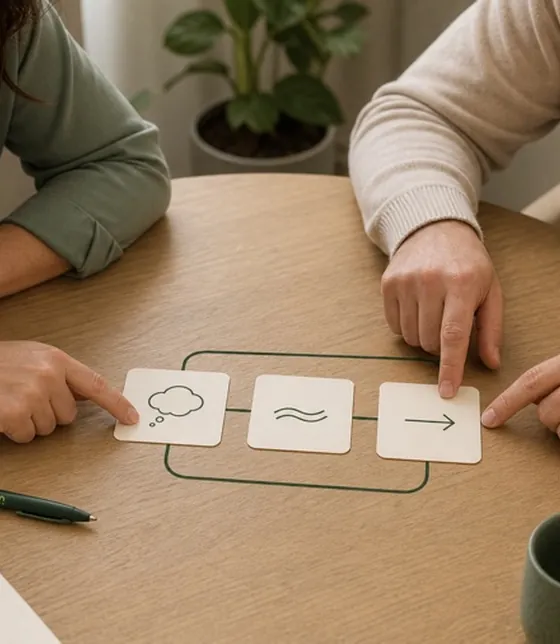 Read with intention













 Meet the clinicians
Bipolar disorder, steadier ground.
The highs and lows can feel like living as two different people. With the right support alongside your medical care, most people find real steadiness again. In Parramatta or online.
Bipolar can look like two different tides.
It is more than ordinary ups and downs. The shifts are bigger, last longer, and get in the way of everyday life. This is information, not a diagnosis; only an assessment can tell you what is going on.
- Stretches of racing thoughts, big plans and needing very little sleep.
- Doing or spending things during a high that you later regret.
- Then a crash leaves you heavy, flat, exhausted and unable to enjoy anything.
- Mood that swings more than the situation seems to call for.
- Sleep and routine that fall apart when an episode is building.
- The changes are noticeable to the people close to you.
- Relationships, work or study take the strain of the swings.
- You want a way to see an episode coming before it takes over.
Bipolar disorder is a recognised, well-understood condition, and a very manageable one with the right care. Psychology works best alongside medical treatment from your GP or psychiatrist. If you are in crisis or having thoughts of suicide, please use our urgent help page. Support is available right now.
Psychology alongside your care.
Medication is usually central to managing bipolar disorder. Psychological therapy adds the skills that help you stay well between episodes, always in step with your medical team.
CBT
Cognitive behaviour therapy helps you spot early warning signs, manage triggers like stress and lost sleep, and respond before a swing takes hold.
Family-focused therapy
Bringing partners or family in to improve communication, ease conflict, and share a plan for the warning signs.
Social rhythm & routine
Protecting sleep, daily rhythm and stability. These are some of the most powerful levers for keeping mood on an even keel.
Psychoeducation & wellbeing plan
Understanding your own pattern and building a personalised plan for staying well and heading off relapse.
With your consent we coordinate with your GP and psychiatrist so your care joins up. You review your goals together regularly, and you can pause or stop at any time.

Your first weeks, step by step.
No surprises, no pressure. Here is how the early sessions usually unfold.
- 1
Mostly a conversation
Your psychologist asks about your history, your current care and what you would like to change. Together you sketch a plan that fits alongside your medical treatment.
Session one - 2
Mapping your pattern
You chart your mood over time, your personal warning signs, and the routines that keep you steady. Then you start practising skills between sessions.
Sessions two to four - 3
Reviewing together
You build and revisit a wellbeing plan, check progress against your goals, and adjust as life changes, with your care team kept in the loop.
Ongoing
Know your costs before you start.
We confirm your fee and any rebate in writing before your first session. If a funding body covers you, we bill them directly wherever possible.
See fees- Medicare: rebates on up to 10 sessions a year with a Mental Health Treatment Plan from your GP.
- NDIS, DVA, Workers Comp & CTP: usually no out-of-pocket cost when approved.
- Private health: claim through your extras cover, with no referral needed.
Meet our clinicians.

Bülent Ada
Principal Psychologist & Director
Anxiety · Trauma

Mohan Shankarappa
Clinical Psychologist
Depression · Mood

Sijal Ansari
Clinical Psychologist
Trauma · PTSD

Michael L. T. Cheung
Consultant Psychologist
Stress · Couples

Shahim Ahmad
Clinical Psychologist
Stress · Anxiety

Irfan Yigit
Senior Consultant Psychologist
Anxiety · Depression
From our journal

Check in with yourself.
Free, private tools to try before or alongside sessions. They are not a diagnosis.
Free · 5 to 10 min
Take the Mind Health Check
Short questionnaires, scored privately in your browser. We have ticked the ones most related to this page, and you can change them.
Fact sheet: Better sleep
A plain-language guide with practical steps. Free to download.
Try this week
- Keep a regular sleep and wake time; changes in sleep can be an early sign.
- Track your mood each day in a notebook or an app.
- Share your early warning signs with someone you trust.
Need help now? Our urgent help page has who to call, day and night.
Things people ask before booking.
Do I need a referral to start?
Does psychology replace my medication or psychiatrist?
Can therapy actually help with bipolar disorder?
Is what I share confidential?
Can I get Medicare rebates for therapy for bipolar disorder?
Is telehealth suitable for bipolar disorder?
Can my family be involved?
What if I need help right now?

Steadier days are within reach.
Tell us what is going on and we will match you with a psychologist who works with mood disorders, usually after a free triage. We will work alongside your GP and psychiatrist, with your consent.
Talk to us
How can we help?
Fees & rebatesFind a psychologistMind Health CheckReferring a clientWorkplaces & EAP
If you need support right now Lifeline 13 11 14 · Suicide Call Back 1300 659 467 · 13YARN 13 92 76 · Emergency 000. Available 24/7 — this panel isn't.
We'll call you back on the number you gave us within one business day. If it's urgent, call 1300 084 200.

Follow the circle. Breathe in as it grows, out as it settles. Nothing else to do.
That calm you just found is always within reach. When you'd like someone alongside you, we're here.