 The referral pathways guide



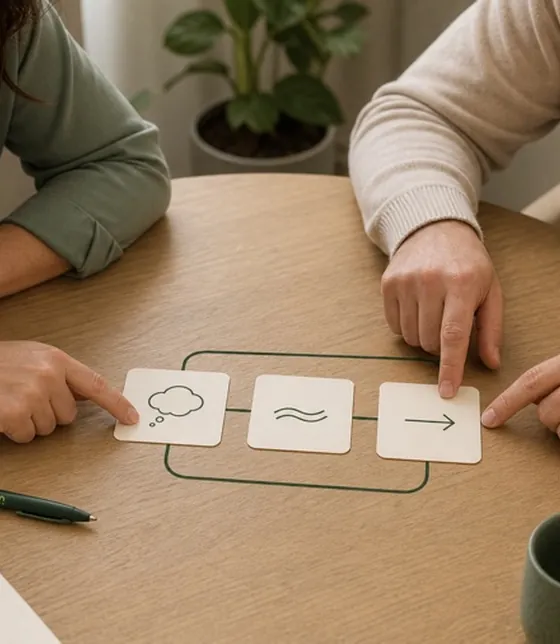 Read with intention













 Meet the clinicians
Condition information
Post-traumatic stress disorder (PTSD) is a recognised psychological response to an event that overwhelmed your ability to cope. EMDR, trauma-focused CBT and Cognitive Processing Therapy all have strong research support.
Common experiences
- Intrusive memories, flashbacks or nightmares of the event
- Avoidance of reminders: places, people, conversations
- Hypervigilance: feeling ‘on edge’, startled easily
- Difficulty trusting others or feeling safe
- Numbness, emotional flatness, dissociation
- Sleep disturbance: insomnia, nightmares
- Difficulty concentrating or remembering
Clinical notes
Australian context: About 12% of Australians experience PTSD in their lifetime. Source.
Clinical coding reference: DSM-5: 309.81 · ICD-11: 6B40
This page is general information only. It is not a diagnosis or personal medical advice. A registered psychologist or doctor can help work out what is happening in your situation.
Questions people often ask
Do I need to talk about the trauma in detail?
Not necessarily. EMDR specifically doesn’t require talking through the trauma in detail. Other approaches like CPT use written exposure. Your psychologist will choose an approach that’s clinically effective and tolerable for you.
What’s the difference between PTSD and complex PTSD?
Complex PTSD develops from prolonged or repeated trauma (often in childhood or relationships). It involves PTSD symptoms plus difficulties with emotional regulation, self-concept, and relationships. Treatment is similar but typically longer and more structured.
Is EMDR supported by research?
Yes. EMDR is recommended by the WHO, the APA, and Australia’s NHMRC as a first-line treatment for PTSD. Multiple randomised controlled trials show outcomes comparable to trauma-focused CBT.
Can I see a clinician without re-traumatising myself?
Yes. The first sessions focus on building safety, stabilisation skills, and the therapeutic relationship, not on processing trauma. Active trauma work begins only when you and your clinician agree you’re ready.
Need help deciding what to do next?
Reception can help you choose the right appointment type or clinician. If you feel unsafe or at immediate risk, use the urgent help page first.