

You know the feeling. It’s 10 PM and you’re still scrolling—not because you want to, but because stopping feels impossible. Your eyes ache. Your neck is stiff. You’ve read the same paragraph three times without absorbing a word. Tomorrow you’ll wake exhausted, promising yourself you’ll do better, and then the cycle begins again.
This isn’t a lack of willpower. It’s digital burnout—and it’s reaching epidemic proportions in Australia.
The average Australian now spends nearly two hours daily on social media across six different platforms, with many spending significantly more.1 But the real cost isn’t measured in hours. It’s measured in fractured attention, disrupted sleep, eroded relationships, and a pervasive sense of exhaustion that weekends can’t cure.
Oxford’s Word of the Year 2024—“brain rot”—captures what millions are experiencing: the cognitive decline and mental fatigue from endless exposure to low-quality digital content.2 And while the term might sound like hyperbole, the neuroscience suggests it’s uncomfortably accurate.
What Is Digital Burnout? More Than Just Tiredness
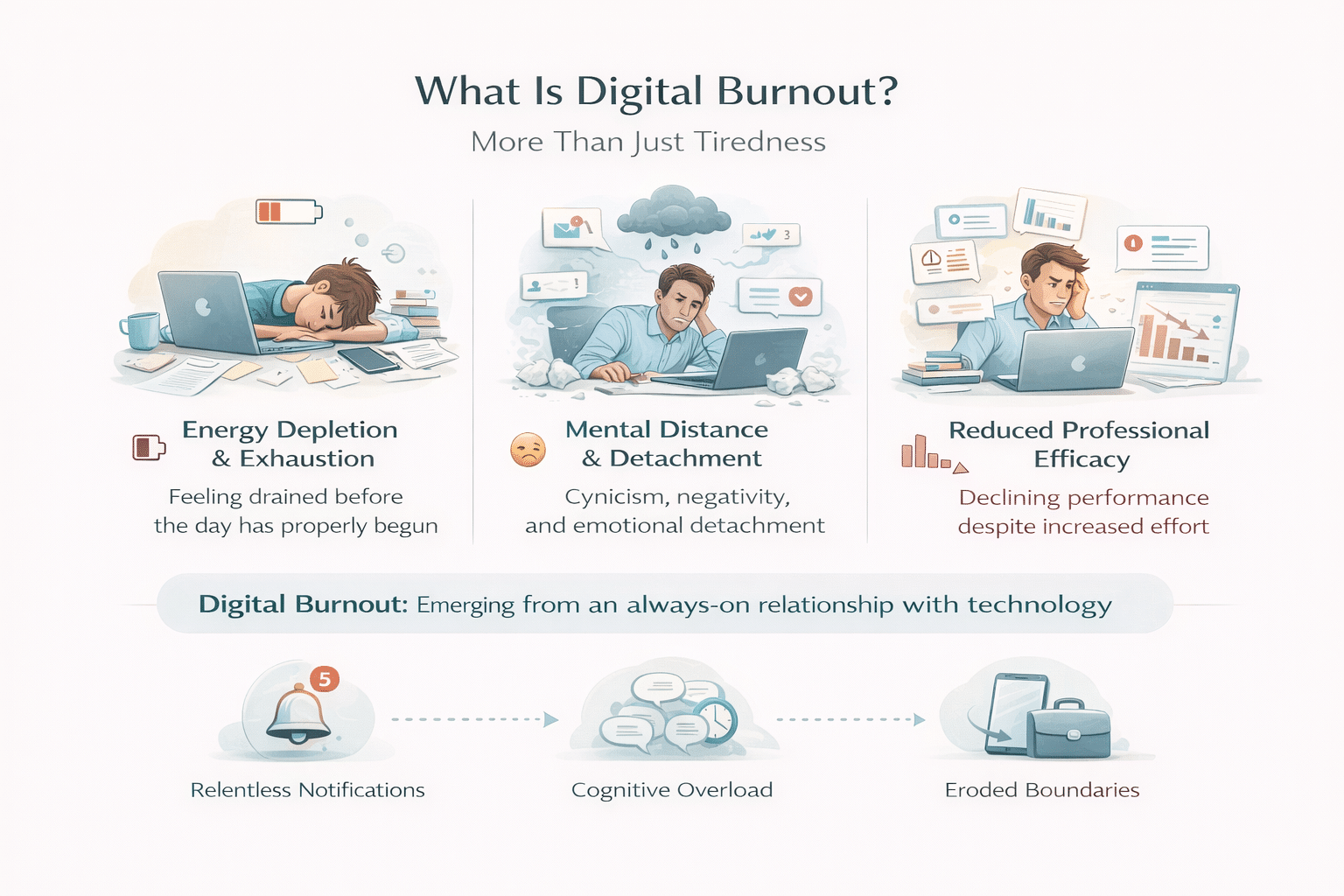
Digital burnout is a specific manifestation of occupational burnout that emerges from our always-on relationship with technology. The World Health Organization recognises burnout as an occupational phenomenon characterised by three dimensions:3
- Energy depletion and exhaustion – feeling drained before the day has properly begun
- Increased mental distance from work – cynicism, negativity, and emotional detachment
- Reduced professional efficacy – declining performance despite increased effort
What distinguishes digital burnout is its source: the relentless stream of notifications, the pressure to respond immediately, the cognitive load of processing vast quantities of information, and the erosion of boundaries between work and personal life that smartphones have enabled.
Unlike traditional burnout, which might resolve with a holiday, digital burnout follows you everywhere your phone does—which is to say, everywhere.
Key distinction: Digital burnout isn’t caused by technology itself, but by how technology has restructured our attention, our work expectations, and our relationship with rest. The solution isn’t rejecting technology—it’s reclaiming intentionality about how we use it.
The Neuroscience of Screen Exhaustion
Understanding why digital burnout feels so overwhelming requires understanding what’s happening in your brain.
The Dopamine Hijack
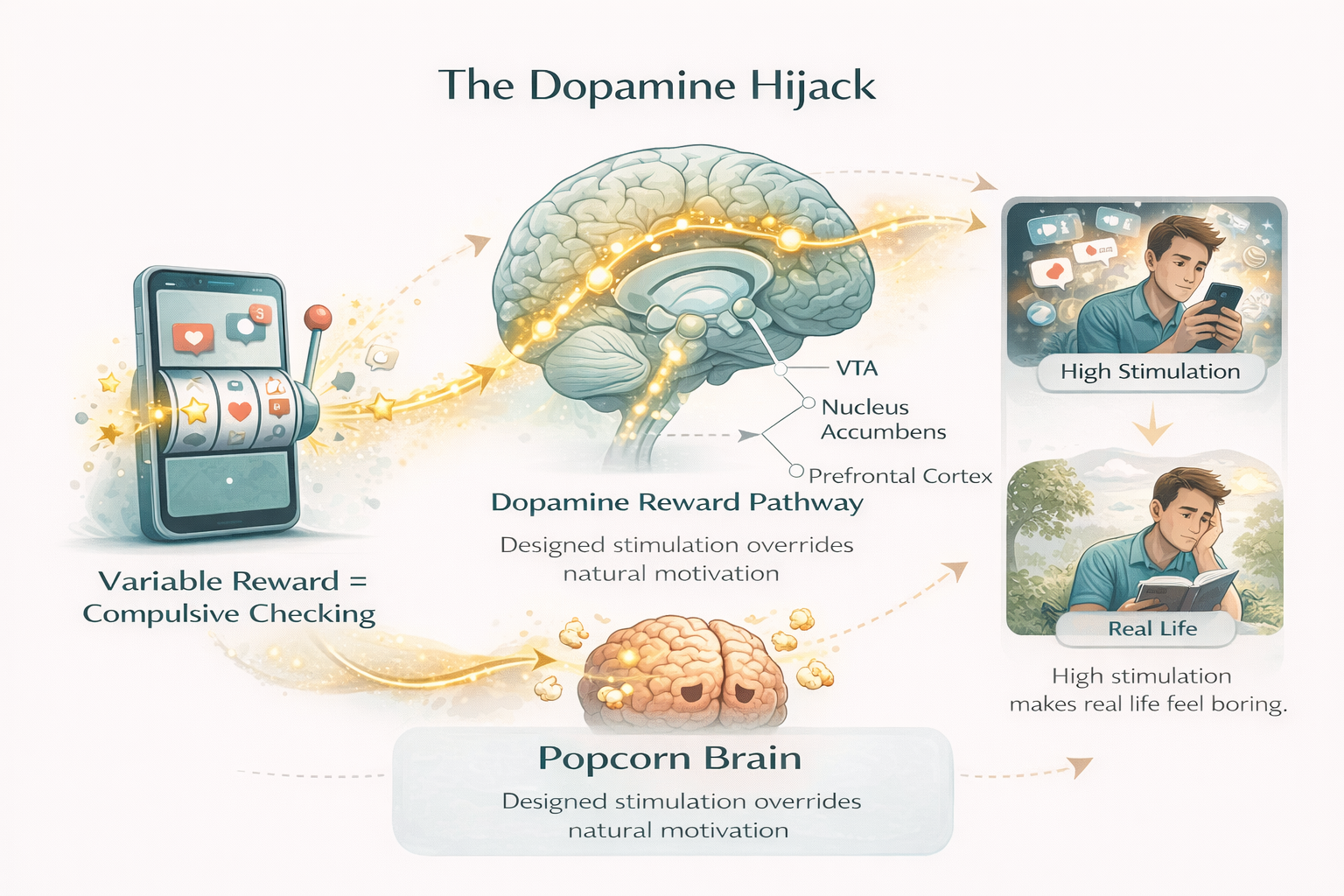
Social media platforms are engineered to exploit your brain’s reward systems. Every like, comment, and notification triggers a small dopamine release—the same neurotransmitter involved in addiction.4 The variable reward schedule (you never know when the next notification will come) creates compulsive checking behaviour that mirrors gambling psychology.
Over time, this creates tolerance: you need more stimulation to feel the same reward. Real-world activities—conversations, nature, reading—start to feel insufficiently stimulating. Researchers have termed this phenomenon “popcorn brain”: a state where constant online overstimulation makes the real world feel impossibly slow and dull.2
Attention Residue and Cognitive Fragmentation
Every time you switch between tasks—checking email, responding to a message, returning to work—a portion of your attention remains on the previous task. This attention residue accumulates throughout the day, progressively degrading your capacity for deep focus.5
Research suggests the average knowledge worker checks email every 6 minutes and switches tasks every 3 minutes. Each switch carries a cognitive cost. By mid-afternoon, many people are operating at a fraction of their mental capacity—exhausted not from the work itself, but from the constant context-switching.
The Nervous System Impact
Constant digital stimulation keeps your nervous system in a state of low-grade activation. Notifications trigger the same stress response as potential threats—your body doesn’t distinguish between a work email and a predator. This chronic activation leads to:
- Elevated cortisol levels
- Disrupted sleep architecture
- Impaired immune function
- Difficulty accessing the calm, regulated state needed for rest and recovery
The result is a paradox: you’re exhausted but can’t properly rest. Wired but tired. Your body craves recovery, but your dysregulated nervous system keeps returning to the screen.
Doomscrolling and Existential Anxiety
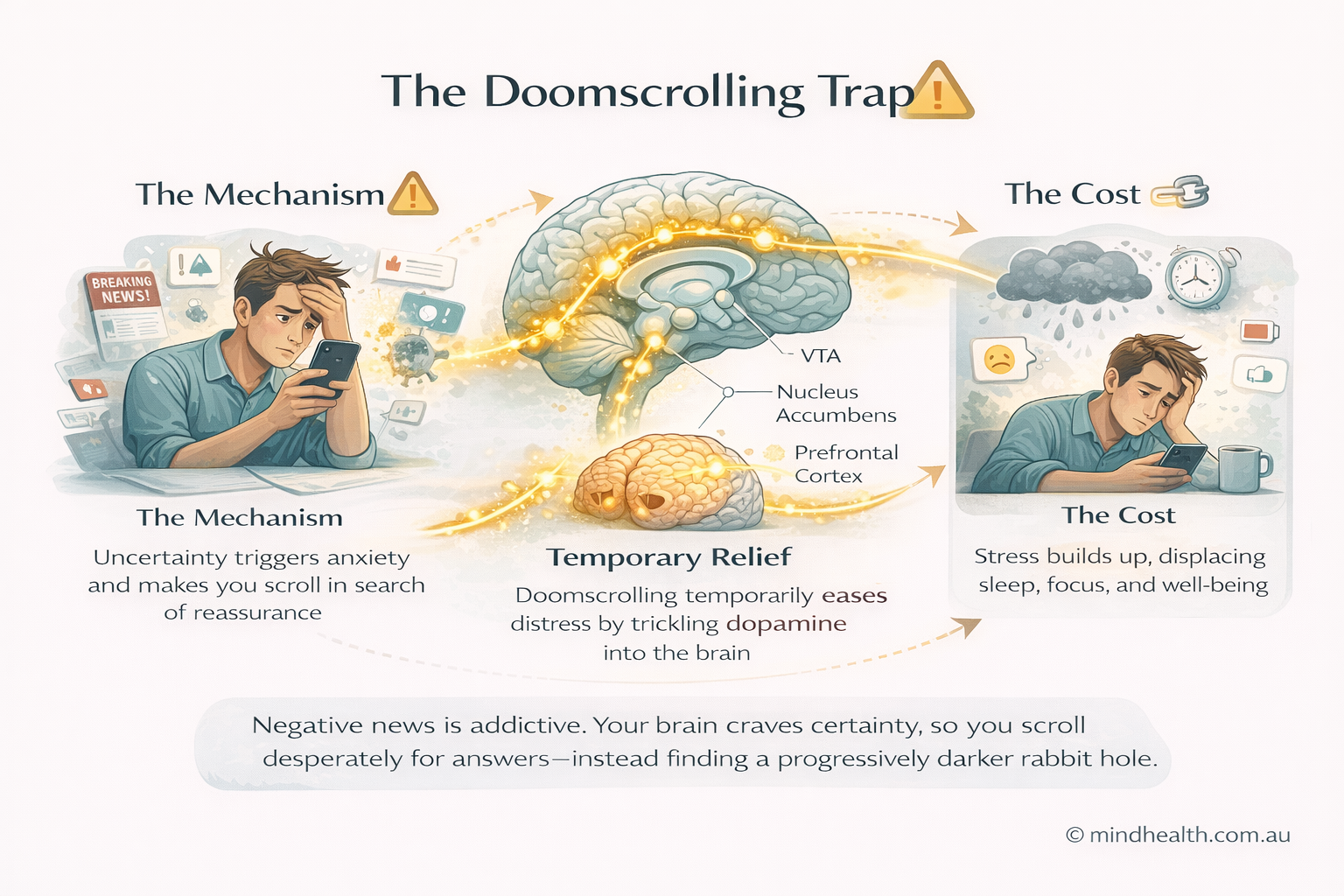
Doomscrolling—the compulsive consumption of negative news—deserves special attention. Research from Harvard Medical School indicates that doomscrolling doesn’t just increase stress—it evokes greater levels of existential anxiety: dread about human existence, mortality, and the future.6
Unlike specific anxieties that can be addressed, existential anxiety is diffuse and pervasive. It colours everything without attaching to anything specific—making it particularly difficult to resolve.
Critically, employees who doomscroll during work hours become less engaged with professional tasks, creating a vicious cycle: work stress drives doomscrolling, which increases anxiety, which impairs work performance, which increases work stress.
The Australian Digital Burnout Crisis: 2025 Data
The statistics paint a concerning picture of Australian workplace mental health:
Key Findings from 2024-2025 Research
The Corporate Mental Health Alliance Australia 2024 Survey reveals:7
- 46% of Australian employees experience some degree of burnout (up from 44% in 2022)
- 21% face severe burnout (persistent or complete)—a 4% increase since 2022
- Supervisors and managers show the highest burnout rates at 54%—yet feel the least supported
- Workers under 25 report the highest mental health struggles, with 42% experiencing poor mental health
The TELUS Health Mental Health Index found that 47% of Australian workers feel mentally or physically exhausted at the end of each working day, with excessive workload identified as the leading cause.8
The Remote Work Paradox
Despite offering flexibility, remote work has intensified digital burnout for many:
- 86% of full-time remote workers experience burnout9
- 67% of remote workers feel pressured to be available constantly
- 61% find it more difficult to “unplug” from work during off-hours
The blurring of boundaries—working from the same space you live, with no commute to mark transitions—has made digital disconnection harder than ever.
The Generational Dimension
While digital burnout affects all ages, younger workers are particularly vulnerable. Gen Z reports the highest levels of burnout, possibly because they’ve never known a workplace without constant connectivity.10 The expectation of immediate availability feels normal—even when it’s unsustainable.
Paradoxically, older workers who remember pre-digital workplaces may have more psychological resources for disconnection, simply because they have experience of work without smartphones.
Warning Signs Your Brain Is Overloaded
Digital burnout often develops gradually. Recognising the warning signs early allows intervention before severe symptoms develop.
Physical Warning Signs
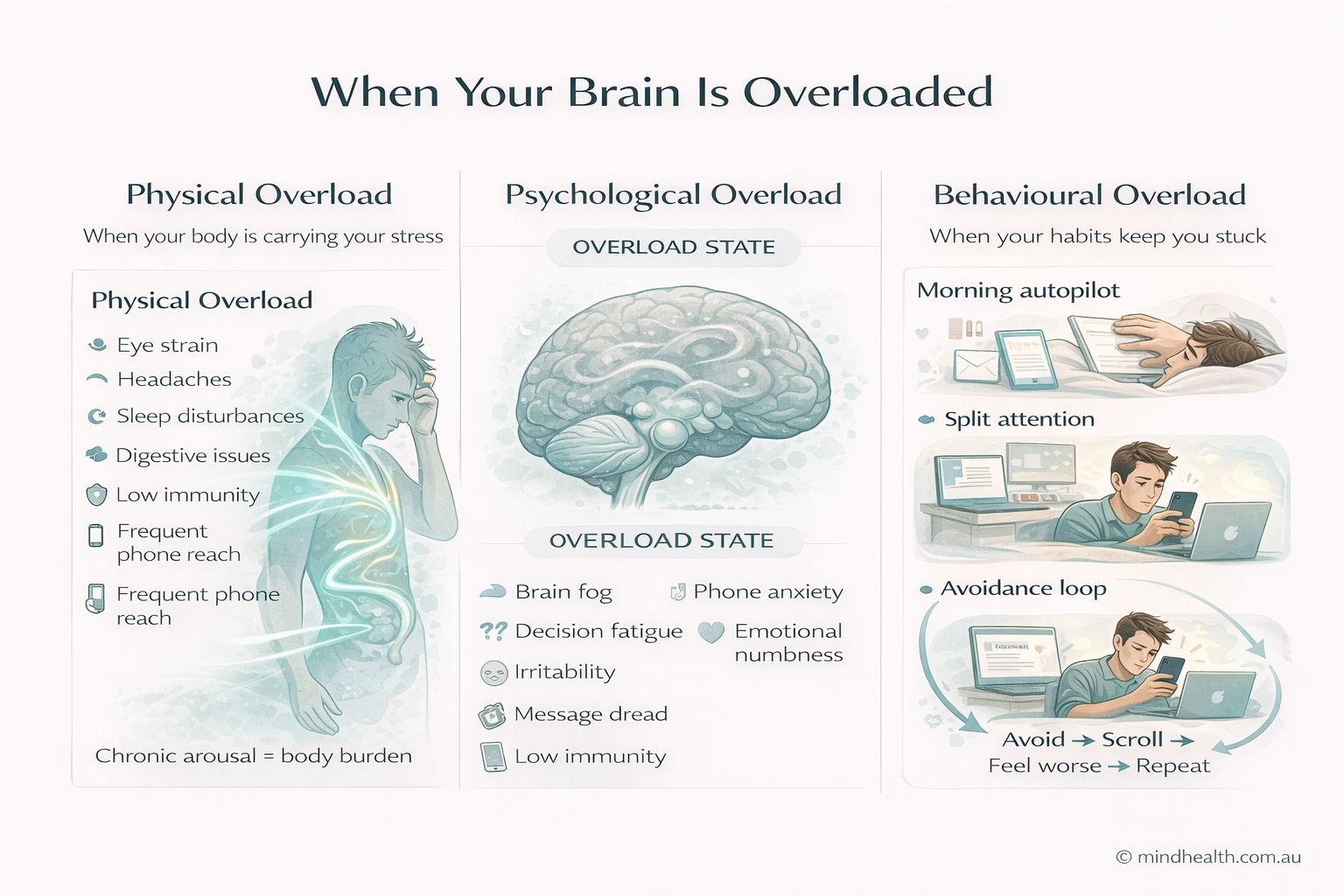
- Chronic eye strain, headaches, or blurred vision
- Persistent neck, shoulder, and back tension
- Sleep disturbances—difficulty falling asleep, staying asleep, or waking unrefreshed
- Digestive issues (the gut-brain connection responds to chronic stress)
- Weakened immune function and frequent minor illnesses
- Physical restlessness—difficulty sitting still without reaching for a device
Psychological Warning Signs
- Difficulty concentrating or persistent “brain fog”
- Feeling overwhelmed by decisions that previously felt manageable
- Increased irritability, particularly when interrupted
- A sense of dread when checking email or messages
- Anxiety when separated from your phone
- Feeling paradoxically disconnected despite constant digital connection
- Reduced capacity for joy or pleasure in offline activities
Behavioural Warning Signs
- Checking your phone immediately upon waking—before getting out of bed
- Inability to watch a show or movie without a second screen
- Difficulty being fully present in face-to-face conversations
- Procrastinating important tasks through scrolling
- Using screens to avoid uncomfortable emotions
- Neglecting hobbies, exercise, or in-person relationships
- Continuing to scroll despite awareness it’s making you feel worse
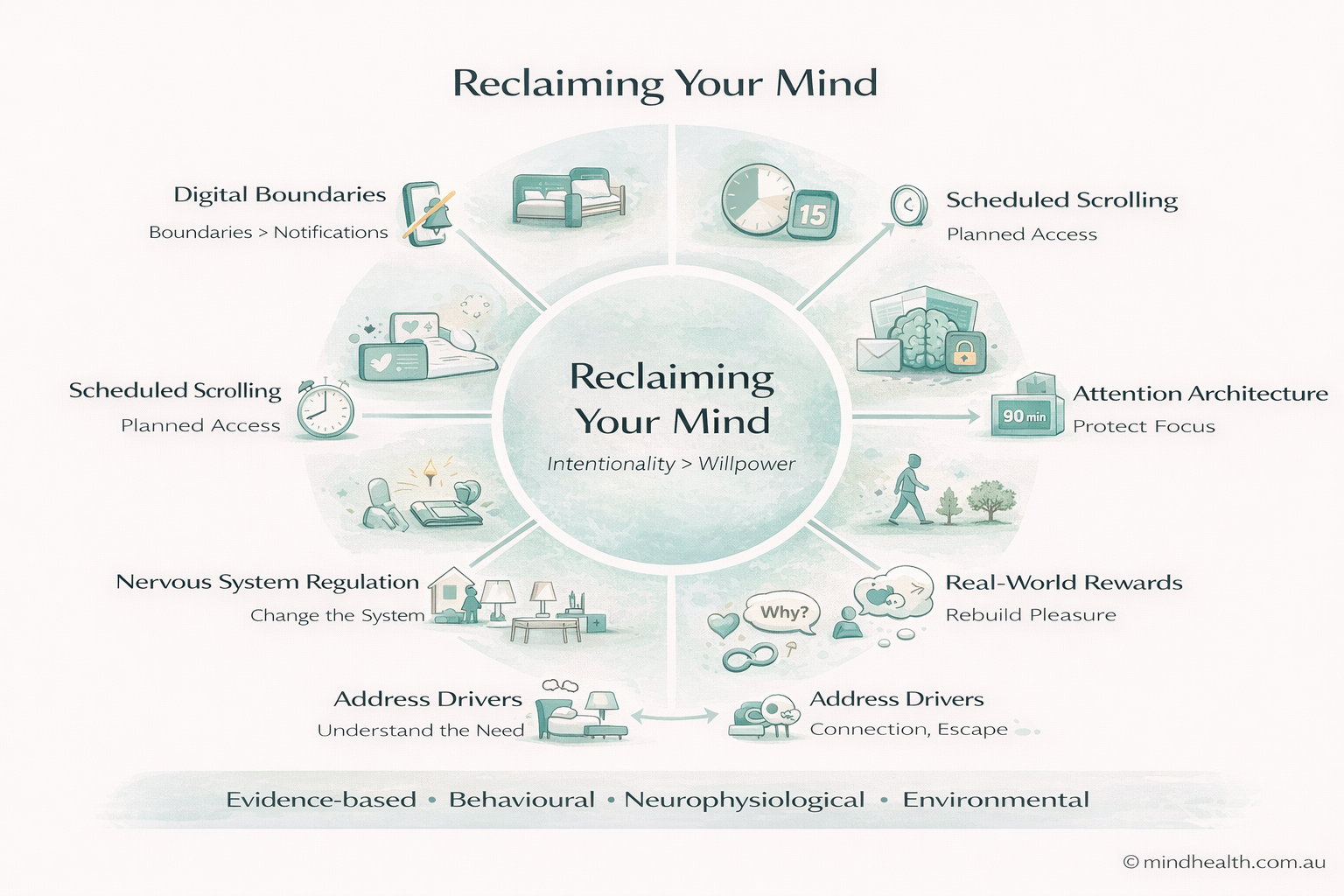
7 Evidence-Based Strategies to Reclaim Your Mind
Recovery from digital burnout requires both immediate interventions and longer-term structural changes. The following strategies are grounded in research and clinical practice.
Strategy 1: Implement Structured Digital Boundaries
Research demonstrates that digital detox interventions significantly reduce depressive symptoms, particularly for individuals with higher baseline severity.11 But complete abstinence isn’t always practical—or necessary.
Practical boundary strategies:
- Device-free zones: Designate the bedroom and dining table as phone-free spaces
- Temporal boundaries: No screens for the first hour after waking and the last hour before sleep
- Notification audit: Disable all non-essential notifications—most apps don’t need real-time access to your attention
- Physical separation: Keep your phone in a different room during focused work or family time
The goal isn’t elimination but intentionality—ensuring you choose when to engage with technology rather than having technology constantly demand your attention.
Strategy 2: Practice “Scheduled Scrolling”
Rather than checking news and social media throughout the day, designate specific times—perhaps 15 minutes in the morning and 15 minutes in the evening.
Why this works:
- Eliminates the constant low-grade anxiety of wondering what you’re missing
- Allows genuine rest during non-scrolling periods
- Often reveals how little you actually miss when not constantly connected
- Reduces total screen time without requiring complete abstinence
Critically, avoid news consumption within two hours of sleep. Negative content activates your nervous system precisely when you need it to wind down.
Strategy 3: Protect Your Attention Architecture
Your capacity for deep focus is a resource that depletes with use and requires protection.
Attention-protection strategies:
- Time-blocking: Schedule 90-minute blocks for deep work with all notifications disabled
- Batch processing: Check and respond to emails at designated times (e.g., 9 AM, 1 PM, 5 PM) rather than continuously
- Strategic friction: Make distracting apps harder to access—delete them from your phone, use website blockers, log out of social media
- Environment design: Create physical spaces that support focus—devices out of sight, work materials visible
Strategy 4: Regulate Your Nervous System
Digital burnout is, at its core, a nervous system issue. Anxiety treatment approaches increasingly recognise the importance of physiological regulation alongside cognitive interventions.
Daily regulation practices:
- Breathing exercises: Extended exhale breathing (inhale for 4, exhale for 8) activates the parasympathetic nervous system
- Physical movement: Even a 10-minute walk without devices helps discharge accumulated stress activation
- Nature exposure: Time in natural environments has measurable effects on stress hormones and attention restoration
- Analog activities: Handwriting, cooking, gardening—activities that engage your hands and senses without screens
For more techniques, see our guide to proven stress relief techniques.
Strategy 5: Rebuild Real-World Reward Pathways
If your brain has adapted to digital stimulation, you need to actively rebuild sensitivity to real-world rewards.
Approaches:
- Boredom tolerance: Practice sitting with boredom without reaching for your phone. This discomfort is temporary and rebuilds your capacity for slower pleasures
- Flow activities: Engage in activities that create absorption and challenge—creative pursuits, sports, learning new skills
- In-person connection: Prioritise face-to-face social interaction, which provides deeper satisfaction than digital connection
- Gratitude practice: Daily gratitude reflection redirects attention from the negativity bias amplified by social media
Strategy 6: Address Underlying Drivers
Compulsive digital use often serves a function—avoiding uncomfortable emotions, escaping stress, or filling a void. Sustainable recovery requires understanding and addressing these underlying needs.
Questions to explore:
- What emotions am I avoiding when I reach for my phone?
- What needs (connection, stimulation, escape) is digital use meeting?
- How else might these needs be addressed?
- What would I do with the time if I weren’t scrolling?
If you consistently use screens to manage anxiety, low mood, or worry, addressing these underlying conditions is essential for lasting change.
Strategy 7: Create Environmental and Social Support
Individual willpower is insufficient against environments designed to capture attention. Lasting change requires structural support.
Environmental strategies:
- Tech-free rituals: Establish device-free mealtimes, morning routines, or evening wind-down practices
- Social accountability: Share your digital boundaries with family, friends, or colleagues
- Alternative defaults: Keep a book by your bed instead of your phone; have a puzzle or instrument accessible in living spaces
- Workspace design: Create physical separation between work and personal spaces where possible
Struggling to Disconnect?
Our psychologists can help you understand your digital habits, address underlying drivers, and develop sustainable strategies for reclaiming your attention and wellbeing.
Or call us: 1300 084 200
The Workplace Dimension: Rights and Responsibilities
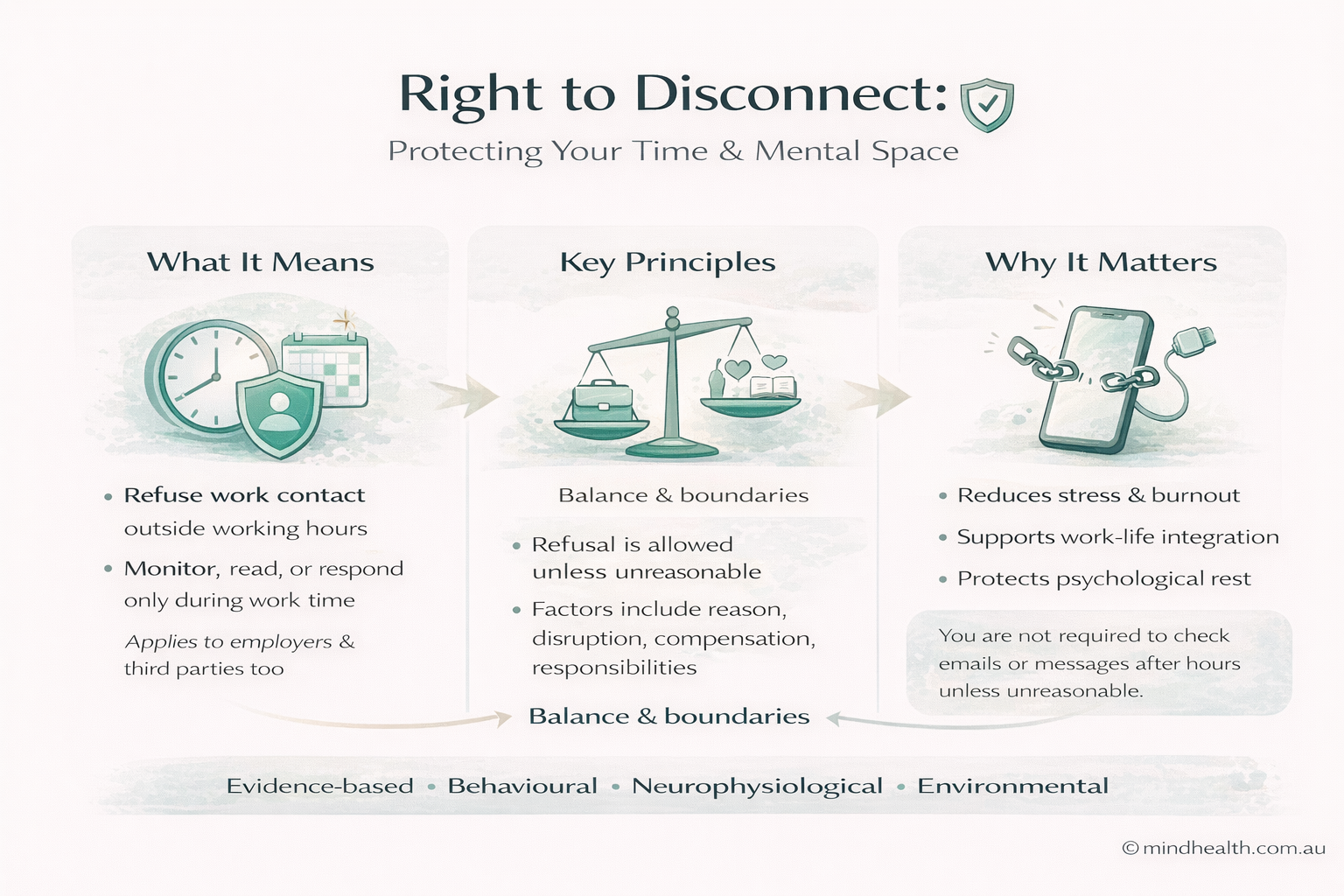
Australia’s “Right to Disconnect”
Australian workplaces are increasingly addressing digital boundaries through policy. The psychosocial hazards legislation requires employers to manage psychological risks, including those from constant connectivity.12
The emerging “right to disconnect” framework recognises that employees shouldn’t be penalised for not responding to work communications outside reasonable hours. While implementation varies, the cultural shift is significant.
What Employers Can Do
Organisations investing in comprehensive mental health programs see measurable returns:7
- 41% lower absenteeism rates
- 25% higher employee engagement
- $4 return for every $1 invested in depression and anxiety treatment
Effective workplace interventions include normalising conversations about mental health, addressing manager burnout specifically (supervisors show the highest rates), implementing flexible technology policies, and fostering connection through structured non-digital interaction.
What Employees Can Do
Even without organisational support, individuals can:
- Set automatic out-of-office responses outside work hours
- Communicate boundaries clearly and consistently
- Model healthy digital behaviour for colleagues
- Utilise Employee Assistance Programs (EAP) where available
- Raise digital wellness as a workplace health and safety concern
When Digital Detox Isn’t Enough
While the strategies above help many people, certain symptoms indicate that professional support is necessary.
Signs You Need Professional Help
Consider seeking support if you experience:
- Inability to reduce screen time despite repeated attempts and negative consequences
- Digital use significantly interfering with work, relationships, or health
- Using screens compulsively to manage anxiety, depression, or other mental health symptoms
- Physical symptoms (chronic insomnia, persistent headaches, significant weight changes)
- Feelings of hopelessness, worthlessness, or thoughts of self-harm
- Panic attacks or overwhelming anxiety
- Difficulty experiencing pleasure in any activities, digital or otherwise
How Psychologists Can Help
At Mind Health, our psychologists can help you:
- Understand patterns: Identify what drives your digital use and what functions it serves
- Address underlying conditions: Treat anxiety, depression, or other conditions that may be driving compulsive use
- Develop personalised strategies: Create a sustainable approach based on your specific situation and goals
- Build skills: Learn cognitive behavioural and acceptance-based techniques for managing urges and emotions
- Address work-related factors: Navigate workplace burnout and boundary-setting challenges
Learn more about what to expect in your first therapy session.
🆘 Immediate Support
If you’re experiencing thoughts of self-harm or suicide, please reach out now:
- Lifeline: 13 11 14 (24/7)
- Beyond Blue: 1300 22 4636
- Emergency: 000
The Path Forward: Intentionality as Antidote
The research is clear: the antidote to digital burnout isn’t rejection of technology or impossible willpower—it’s intentionality. It’s the difference between using your phone and your phone using you.
This requires honest assessment of your current relationship with technology, recognition that the platforms you use are designed to capture attention, and deliberate choices about when, how, and why you engage.
It also requires self-compassion. If you’re struggling with digital burnout, you’re not weak or undisciplined. You’re human, navigating an environment that evolution never prepared you for, using tools designed by thousands of engineers to be maximally engaging.
Change is possible. Your brain is plastic, your habits are malleable, and your attention—though fractured—can be rebuilt. It takes time, it takes support, and it takes consistent practice. But the alternative—continuing on the current trajectory—is far more costly.
Start small. Choose one strategy from this article. Notice how it feels. Build from there.
And if you need support along the way, we’re here to help.
Ready to Reclaim Your Attention?
Our experienced psychologists provide evidence-based support for burnout, anxiety, and the challenges of modern digital life.
Questions? Call 1300 084 200
Frequently Asked Questions
How do I know if I have digital burnout or just regular tiredness?
Regular tiredness resolves with rest. Digital burnout persists despite sleep and weekends off. Key distinguishing features include: symptoms that specifically worsen with screen use, difficulty disconnecting even when you want to, anxiety when separated from devices, and a sense that your attention is fragmented even when not actively using technology. If rest doesn’t restore you and you recognise multiple warning signs from this article, digital burnout is likely a factor.
Is it possible to work in a digital job without experiencing digital burnout?
Yes, but it requires deliberate boundary-setting and attention management. The goal isn’t eliminating technology—it’s establishing healthy patterns: designated focus times without interruption, clear work/personal boundaries, regular breaks, and practices that restore your nervous system and attention. Some industries and roles make this harder, which is why organisational culture and policies matter alongside individual strategies.
Will taking a digital detox fix my burnout?
A short-term detox (a weekend or week away from social media) can provide relief and perspective, but typically doesn’t address the underlying patterns that created burnout. Research shows benefit from detox, particularly for those with higher baseline symptoms, but lasting change usually requires structural modifications to how you engage with technology daily—not just occasional abstinence.11
How long does it take to recover from digital burnout?
Recovery time varies significantly depending on severity, underlying factors, and what changes you implement. Some people notice improvement within weeks of establishing boundaries. Others, particularly those with longstanding patterns or underlying mental health conditions, may require months of consistent practice and potentially professional support. The brain’s attention systems are plastic—they adapted to constant stimulation and can readapt to healthier patterns—but this takes time.
My job requires constant digital availability. What can I do?
Even in high-connectivity roles, there’s usually more flexibility than it first appears. Strategies include: negotiating “focus hours” where you’re not expected to respond immediately, using auto-responders to set expectations, batch-processing communications rather than responding continuously, and protecting non-work hours rigorously. If your job genuinely requires 24/7 availability with no respite, that’s a structural problem worth raising—it’s not sustainable for anyone long-term.
Are young people more susceptible to digital burnout?
Research suggests workers under 25 report the highest rates of poor mental health and burnout.7 This may reflect having never known workplaces without constant connectivity, making “always on” feel normal. However, older workers also experience digital burnout, particularly those in roles where digital demands have increased significantly. The key factor isn’t age but the relationship between expectations and capacity for recovery.
Can therapy really help with screen addiction and digital burnout?
Yes. Psychological approaches like Cognitive Behavioural Therapy (CBT) and Acceptance and Commitment Therapy (ACT) are effective for compulsive behaviours and burnout. Therapy helps identify what drives problematic use, develop alternative coping strategies, address underlying anxiety or depression, and create sustainable change. For many people, the structure and accountability of working with a professional makes the difference between knowing what to do and actually doing it.
Related Articles
Continue your learning with these related resources from Mind Health:
- 15 Proven Stress Relief Techniques for 2025: Expert Tips to Calm Your Mind
- Psychological First Aid: 7 Key Coping Tools During Disasters
- Digital Mental Health in Australia 2025: AI Therapy Chatbots, Apps & Online Support
- Moral Injury: From Hidden Wound to Clinical Recognition
References
- Australian Computer Society. (2025). Aussies addicted to social media: 2 hours a day. Information Age. https://ia.acs.org.au
- Oxford University Press. (2024). Word of the Year 2024: Brain rot. Oxford Languages. https://languages.oup.com
- World Health Organization. (2019). Burn-out an “occupational phenomenon”: International Classification of Diseases. https://www.who.int
- Haynes, T. (2018). Dopamine, smartphones, and you: A battle for your time. Harvard University Science in the News. https://sitn.hms.harvard.edu
- Mark, G., Gudith, D., & Klocke, U. (2008). The cost of interrupted work: More speed and stress. Proceedings of the SIGCHI Conference on Human Factors in Computing Systems, 107-110.
- Harvard Health Publishing. (2024). The dangers of doomscrolling. Harvard Medical School. https://www.health.harvard.edu
- Corporate Mental Health Alliance Australia. (2024). The Leading Mentally Healthy Workplaces Survey Report 2024. https://cmhaa.org.au
- TELUS Health. (2024). TELUS Mental Health Index: Australia April 2024. https://www.telushealth.com
- Foremind. (2024). Employee burnout statistics – Australia 2025. https://foremind.com.au
- Australian Computer Society. (2024). Burnout at ‘alarming levels’ in Australia, report finds. Information Age. https://ia.acs.org.au
- Systematic review. (2024). Digital detox strategies and mental health: A scoping review. PMC. https://pmc.ncbi.nlm.nih.gov
- Safe Work Australia. (2024). Psychosocial hazards. https://www.safeworkaustralia.gov.au

Get Professional Support
Anxiety Treatment at Mind Health
We provide personalised anxiety therapy — CBT, ACT, and exposure therapy — to help you reclaim calm and confidence.
Book an Appointment →Helpful Australian Resources
- Beyond Blue — Support for depression, anxiety and related conditions. Call 1300 22 4636.
- Lifeline Australia — Crisis support and suicide prevention. Call 13 11 14 (24/7).
- Head to Health — Australian Government mental health gateway and digital resources.
- Black Dog Institute — Research-based resources on depression, bipolar disorder, and PTSD.
- SANE Australia — Support for people living with complex mental illness. Call 1800 187 263.
Ready to Take the Next Step?
Our experienced psychologists are here to help. Whether you need support now or just want to check in on your wellbeing, we have options for you.
Medicare rebates available with a Mental Health Care Plan · Telehealth appointments available Australia-wide